




The Modern Classic vs. The Old Masterpiece
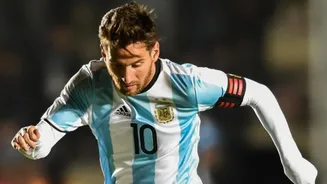
For many, the debate begins and ends with the 2022 final in Qatar. Argentina vs France was a fairy tale script come to life. Lionel Messi’s destiny against Kylian Mbappé’s breathtaking defiance. It had everything: a 2-0 lead, a stunning two-minute comeback,
extra-time goals, and a dramatic penalty shootout. It was a match for the ages, a perfect climax for the modern era. Others might point to the 1970 final, where Pelé’s Brazil dismantled Italy 4-1. That match wasn’t a contest as much as a coronation, the ultimate expression of ‘Joga Bonito’ (the beautiful game), culminating in Carlos Alberto’s iconic team goal. It was football as art. These are worthy contenders, the gold standard for finals. But the greatest match isn’t always a final. Sometimes, it’s a collision of worlds that happens earlier in the tournament.
A Detour to Spain, 1982
To find our answer, we must travel back to Spain in 1982. This tournament was pure, uncut drama. In the semi-final, West Germany and France played out the ‘Night of Seville,’ a 3-3 thriller with a brutal foul (Harald Schumacher on Patrick Battiston), astonishing comebacks in extra time, and the World Cup’s first-ever penalty shootout. It was a saga of heroism and villainy that left a generation of fans breathless. Yet, even that epic encounter was arguably not the best game of the tournament. That honour belongs to a second-round group stage match played in Barcelona’s now-demolished Sarrià Stadium. It was a game that pitted poetry against pragmatism, and its result would change football forever.
The Saints of Brazil
The Brazil team of 1982 is considered by many to be the greatest team to *not* win the World Cup. They were magical. Coached by Telê Santana, the side was packed with generational talents. In midfield, they had the ‘two doctors,’ Sócrates and Falcão, alongside the genius of Zico and the industry of Cerezo. Their football was fluid, joyful, and relentlessly attacking. They didn't just want to win; they wanted to win beautifully. They arrived at their final second-round match against Italy needing only a draw to advance to the semi-finals. Their opponents, Italy, had scraped through the first round with three uninspiring draws, looking predictable and dull.
The Rebirth of Paolo Rossi
Italy had a secret weapon: a striker named Paolo Rossi. He had recently returned from a two-year ban for a match-fixing scandal (of which he was later exonerated) and had been silent the entire tournament. The Italian press was calling for him to be dropped. But coach Enzo Bearzot kept his faith. And on that fateful July afternoon, Rossi exploded. Just five minutes in, he headed Italy into the lead. Brazil, unconcerned, simply flowed forward, and the elegant Sócrates equalised seven minutes later. The script was playing out as expected: Brazil’s superior art would eventually overwhelm Italy’s grit. But Rossi wasn't done. He capitalised on a lazy pass to steal the ball and smash it home for 2-1. Brazil was stunned, but they kept attacking. In the second half, the sublime Falcão ripped a shot from outside the box to make it 2-2. The celebration, a raw explosion of passion and bulging veins, is an immortal World Cup image.
A Game of Philosophies
At 2-2, Brazil had what they needed. A pragmatic team would have shut the game down. But that wasn't their way. They continued to pour forward in search of a winner, leaving themselves vulnerable. With 15 minutes to go, Italy won a corner. The ball fell to Rossi, who swivelled and poked it home, completing his hat-trick and sealing a 3-2 victory. The world was in shock. The beautiful, romantic Brazilians were out. The cynical, defensive Italians were through. Italy would go on to win the World Cup, with Rossi finishing as the top scorer. The match became known as the ‘Tragedy of Sarrià.’