





The Genome's Mysterious 'Dark Matter'
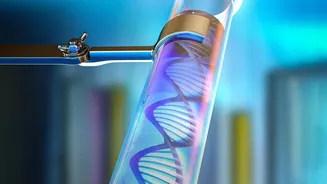
For decades, scientists have been captivated by the human genome, the complete set of genetic instructions for a human being. Yet, a perplexing fact has remained: the parts of our DNA that actually code for proteins—the building blocks of life—make up
less than 2% of the entire sequence. The other 98% was often labelled 'junk DNA' or, more accurately, the 'dark matter' of the genome. We knew this non-coding DNA was important, holding the instructions that orchestrate when and where genes are activated, but understanding its language was a monumental challenge. This vast, unread portion of our genetic blueprint has been a black box, making it incredibly difficult to understand the root causes of many diseases. A huge number of genetic variations associated with conditions like cancer, heart disease, and autoimmune disorders are located in these non-coding regions. Without a way to interpret them, progress has been slow.
Genetic Switches: Promoters and Enhancers
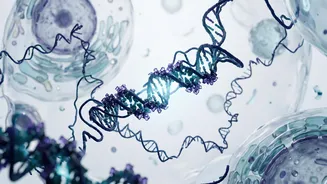
Within this dark matter lie crucial regulatory elements, the most important of which are promoters and enhancers. Think of a gene as a light bulb. The promoter is the switch right next to the bulb, a DNA sequence located just before the gene that tells the cellular machinery where to start reading. An enhancer, on the other hand, is like a remote control or a dimmer switch. It's a stretch of DNA that can be very far away from the gene it regulates, yet it can dramatically boost its activity. The complex interplay between these switches determines how a single genetic blueprint can give rise to all the different cell types in our body, from a heart muscle cell to a neuron. But predicting which of these millions of switches control which genes, and how, has been one of the toughest problems in modern genetics.
Enter AlphaGenome 2: An AI Decoder Ring
This is the context for DeepMind's groundbreaking new model, AlphaGenome 2. Following the revolutionary success of AlphaFold in predicting protein structures, DeepMind has turned its AI expertise to the genome's regulatory language. AlphaGenome 2 is an AI model that can predict gene expression and activity directly from the raw DNA sequence. Trained on over 100 million individual cell profiles, the model can predict how variations in DNA affect gene activity in specific human cell types. It moves beyond broad predictions for entire tissues and can pinpoint changes within a single type of immune cell or heart cell, for example. In tests, AlphaGenome 2 identified nearly twice as many variants linked to gene expression as its predecessor, marking a significant leap in accuracy.
From a Static Map to a Dynamic Movie
The true power of AlphaGenome 2 is that it allows scientists to move from a static map of the genome to a dynamic understanding of how it works. The model can take a genetic variant, mutate it 'in silico' (computationally), and predict its effect across the entire regulatory landscape—how genes are expressed, how DNA is packaged, and what chemical switches are flipped. This is like having a spell checker for the genome; the AI has learned the 'grammar' of DNA and can flag edits that are likely to cause problems. This predictive power is a game-changer for understanding 'Variants of Uncertain Significance' (VUS)—mutations whose effects are unknown, which have long been a major headache for geneticists.
A New Era for Medicine and Research
The implications for medicine are profound. By understanding which non-coding variants are causal for a disease, researchers can identify new drug targets with much greater confidence. This could dramatically reduce the high failure rate of drugs in clinical trials, which often happens because of an incomplete understanding of the disease's genetic basis. In one early example, AlphaGenome 2 computationally reproduced a recent discovery in inflammatory bowel disease, correctly identifying the specific DNA variant in a distant regulatory switch that overactivates a gene in gut immune cells. This ability to link specific variants to specific cell types will accelerate research into complex conditions like Alzheimer's, heart disease, and cancer. By making its predictions and tools accessible, DeepMind is democratizing this power, allowing smaller labs and biotech startups to test new hypotheses that were once only possible for large, well-funded institutions.