


A Threat From 93 Million Miles Away
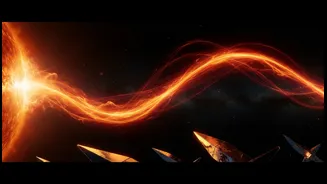
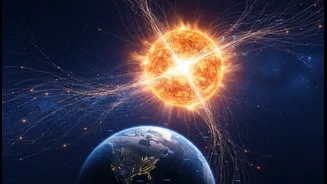
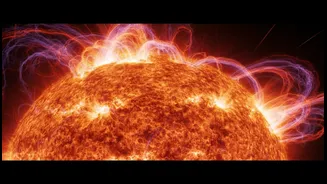
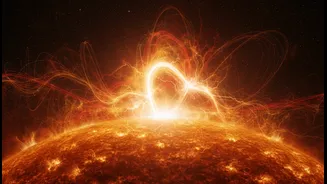
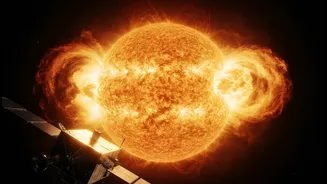
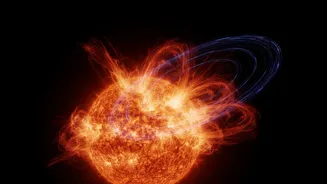
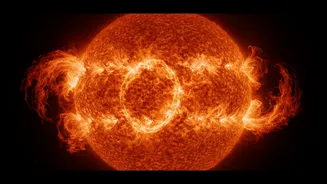
Our modern society runs on technology that is vulnerable to space weather. A major solar storm, or Coronal Mass Ejection (CME), involves the Sun blasting enormous clouds of charged particles and magnetic fields into space. If aimed at Earth, these storms
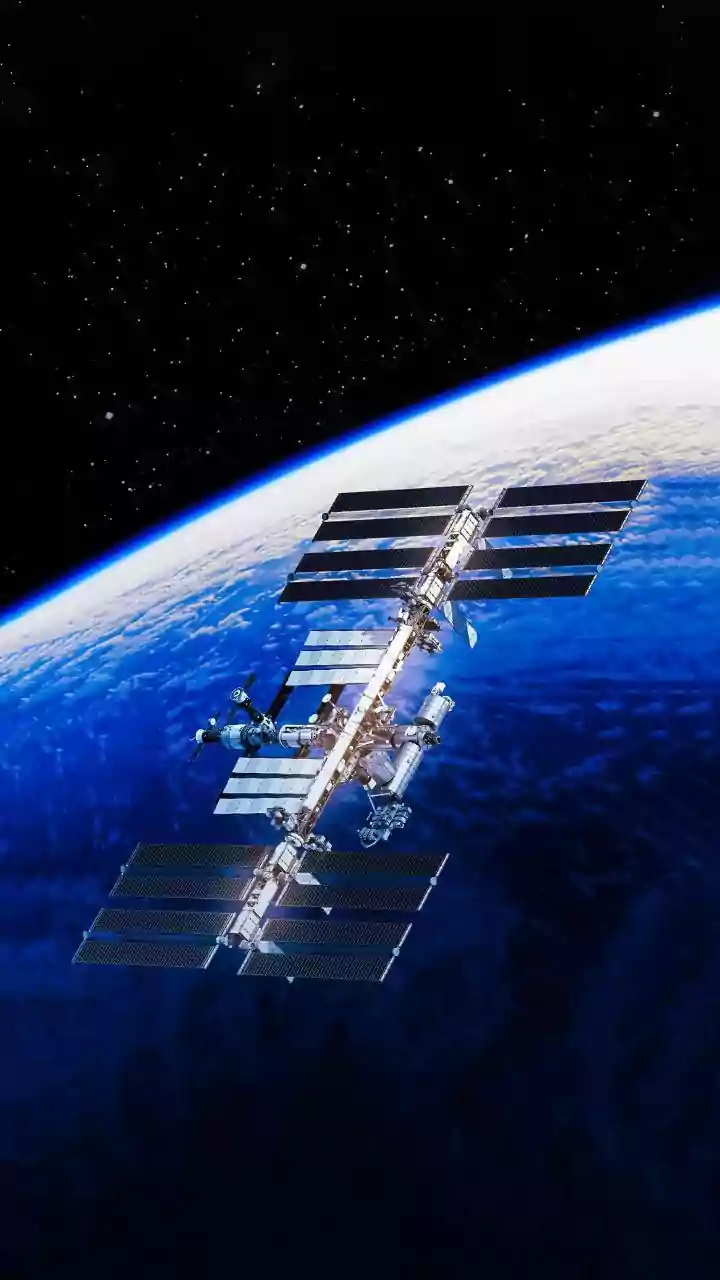
can have serious consequences. They can induce powerful electrical currents in power grids, potentially causing widespread blackouts by overheating and damaging critical transformers. They can also disrupt radio communications, scramble GPS signals, and damage or even knock out the satellites that our digital economy, navigation systems, and telecommunications rely on. A severe event in 2022, for instance, caused 38 SpaceX satellites to fall out of orbit.
The Challenge of Early Warnings
For years, forecasting the impact of a solar storm has been a significant challenge. While scientists can see a CME leaving the Sun, predicting its severity and exact arrival time has been difficult. The crucial factor is the orientation of the magnetic field within the CME; if it is oriented opposite to Earth's magnetic field, it can cause a much more severe geomagnetic storm. Traditionally, our best real-time warning has come from spacecraft at the L1 Lagrange point, about 1.5 million kilometres from Earth. However, for the fastest CMEs, this provides only 15 to 60 minutes of advance warning—hardly enough time to adequately protect sensitive infrastructure.
A New Dawn in Space Observation
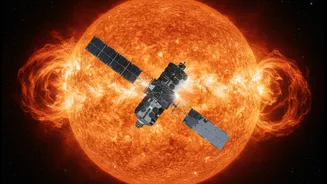
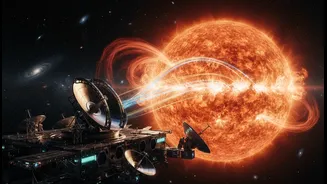
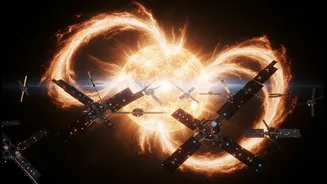
This is where a new fleet of solar observatories comes in. By stationing spacecraft at different vantage points, scientists are creating a more complete, 3D picture of solar events as they happen. India's own Aditya-L1 mission plays a pivotal role in this global effort. Positioned at the L1 point, it provides continuous, uninterrupted observation of the Sun, allowing for early detection of eruptions. Working in concert with other missions like NASA's Parker Solar Probe and the European Space Agency's Solar Orbiter, Aditya-L1 contributes crucial data that helps track a storm's evolution from the Sun to Earth. This multi-point observation strategy has already yielded groundbreaking insights into the structure and behavior of CMEs.
Artificial Intelligence Joins the Watch
The sheer volume of data streaming from these observatories is immense. Human analysts cannot process it fast enough to provide timely warnings. This is where artificial intelligence (AI) and machine learning (ML) are becoming game-changers. Scientists are now developing AI models that can sift through vast datasets of solar imagery and measurements to identify complex patterns that precede solar flares and CMEs. These models can forecast the likelihood, timing, and even the potential magnetic properties of an eruption with increasing accuracy, effectively extending our warning times from minutes to hours or even days. This data-driven approach complements traditional physics-based models, heralding a new, more powerful era of space weather forecasting.
What This Means for India
For a rapidly digitizing nation like India, the stakes are high. Protecting the country's growing satellite fleet, robust communication networks, and critical power infrastructure is a national priority. The improved forecasting made possible by missions like Aditya-L1 is not just an academic achievement; it is a vital component of national security and economic resilience. By providing more reliable and timely warnings, authorities and infrastructure operators can take preventative measures, such as temporarily powering down sensitive satellite components or re-routing power loads to mitigate the risk of blackouts and service disruptions. Aditya-L1's contributions position India as a key player in the global effort to defend our planet from the Sun's powerful outbursts.