






What is a PUC Certificate?
A Pollution Under Control (PUC) certificate is an official document that certifies your vehicle's emissions are within the permissible limits set by the government. Mandated under the Central Motor Vehicles Act of 1988, this certificate is as essential
as your driving licence or registration certificate for legally operating a vehicle on Indian roads. It serves as proof that your car or bike is not contributing excessively to air pollution. For new vehicles, a PUC certificate is typically provided by the dealer and is valid for one year. After that, it needs to be renewed periodically.
Why Is This Rule Enforced Now?
The 'No PUC, No Fuel' mandate is a key part of Delhi's Winter Action Plan, a proactive strategy to combat the severe air pollution that plagues the region during the colder months. Authorities have expanded this rule, which was already active in parts of Delhi, across the entire NCR starting from October 1, 2026. The enforcement is driven by the Commission for Air Quality Management (CAQM) to ensure all vehicles on the road comply with emission norms before the peak pollution season begins. Fuel stations are now being equipped with Automatic Number Plate Recognition (ANPR) cameras that verify a vehicle's PUC status with the central Parivahan database before dispensing fuel.
The Consequences of Non-Compliance
The most immediate consequence of an invalid or expired PUC certificate is being denied petrol, diesel, or CNG at any fuel station across Delhi and the specified NCR districts. Beyond this inconvenience, there are significant financial penalties. Under the Motor Vehicles Act, driving without a valid PUC certificate can attract a hefty fine of up to ₹10,000. In some cases, repeated offences can even lead to imprisonment for up to six months or suspension of your driving licence. It's also important to note that a valid PUC certificate is often required by insurance companies to process claims or renew your policy.
How to Get or Renew Your PUC Certificate
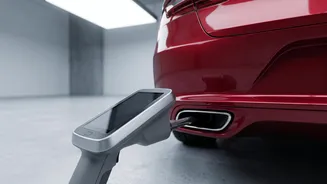
Getting your vehicle tested is a straightforward process. You must take your vehicle to an authorised emission testing centre, many of which are located at petrol pumps and workshops across the city. A technician will use specialised equipment to analyse your vehicle's exhaust. For petrol vehicles, this involves a single reading at idle, while diesel vehicles are tested by pressing the accelerator multiple times to measure smoke density. If the emissions are within the prescribed limits, you will be issued a PUC certificate. The cost is nominal, generally ranging from ₹80 to ₹140, depending on the vehicle type. You cannot get a new certificate online, but you can download an existing, valid one from the official Parivahan Sewa website.
Certificate Validity and Key Exemptions
The validity period of a PUC certificate depends on the vehicle's age and emission standard. For newer vehicles that are compliant with BS-IV or BS-VI norms, the certificate is valid for 12 months. For older vehicles, it must be renewed every six months. It's crucial to keep track of your expiry date, which can be checked on the Parivahan website. The only vehicles exempt from this rule are electric vehicles, as they have no tailpipe emissions. Furthermore, in Delhi, petrol vehicles older than 15 years and diesel vehicles older than 10 years cannot be issued a PUC certificate, as they are considered 'end-of-life' and are not permitted on the roads.