






The world of AI just became a lot more familiar for millions of Indians. With its latest GPT-Live-1.1 update, ChatGPT has introduced two dedicated Hindi voices, a move that goes far beyond a simple software enhancement.
Meet Neer and Leher
The centerpiece of the GPT-Live-1.1
update is the introduction of two specifically trained Hindi voices named Neer and Leher. This is a significant leap from older text-to-speech systems that often applied a generic robotic tone to different languages. These are 'dedicated' voices, meaning they were developed with a deep understanding of Hindi's unique cadence, pronunciation, and intonation. The goal is to make conversations with the AI feel more natural and intuitive, whether a user is asking for help with a complex topic or managing daily tasks. This update is rolling out progressively to ChatGPT users on both mobile apps and the web. The availability of specific voices can vary by region and account as the rollout continues.
A Leap in Conversational AI
This update is about more than just translation; it's about genuine conversation. Early text-to-speech and even recent AI voice models often struggled with the nuances that make speech sound human. The new models aim to deliver smoother real-time interactions with improved pronunciation and fewer awkward pauses or repetitions. OpenAI has indicated that the new model is better at handling the natural flow of conversation, including the ability for users to interrupt the AI, just as they would in a human dialogue. This focus on natural interaction is critical in a market like India, where voice notes and spoken commands are increasingly preferred over typing.
More Than Just Hindi
The introduction of Neer and Leher is part of a much broader strategic push by OpenAI to enhance its multilingual capabilities. The GPT-Live-1.1 update also includes new and improved voice options for French, German, Japanese, Korean, and Mexican Spanish. This global expansion signals a strategic shift for AI developers, moving away from an English-centric model to a more inclusive and global platform. For a company like OpenAI, customizing its products for large, diverse markets is essential for growth. The company's Applications CTO, Vijaye Raji, has stated that while building capable products is important, making them truly usable for a global audience is the next critical step.
The Strategic Importance of India
OpenAI's focus on India is no coincidence. The country is already one of ChatGPT's largest consumer markets globally. With hundreds of millions of Hindi speakers and a rapidly growing 'audio-first' user base that prefers listening and speaking to reading, the potential is enormous. Prabhjeet Singh, OpenAI's India MD, has noted that a 'real big focus' for the company is on Hindi and other vernacular languages because most of India does not use English as its primary language. Furthermore, the update addresses the widespread phenomenon of 'code-switching', where users naturally mix Hindi and English in the same sentence. Enhancing the AI's ability to understand and respond to this mixed-language usage is key to unlocking its full potential across the country.
How to Access the New Voices
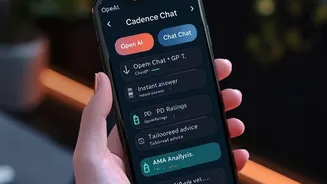
For users eager to try the new feature, accessing it is straightforward. First, ensure your ChatGPT app is updated. In the app's settings, navigate to the 'Voice' section. Here, you can select your preferred voice from the available list. If Neer and Leher are available for your account, you will see them as options. Once a voice is selected, you can start a voice chat and begin speaking in Hindi. You can also ask ChatGPT to reply in Hindi during a conversation, even if you start in English, making the experience flexible for bilingual users.