








An Annual Environmental Audit
Each year, the Centre for Science and Environment (CSE), a Delhi-based research and advocacy group, releases its comprehensive State of India's Environment (SoE) report. This publication serves as a critical stocktake of the country's ecological health,
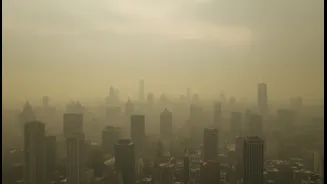
covering everything from extreme weather events to biodiversity and waste management. The 2026 edition, released in February, continues this tradition, providing an essential, data-driven look at the pressures facing the nation. This year, while the report highlights multiple overlapping crises, its findings on air quality are particularly stark, revealing a complex picture of limited gains and significant, often invisible, challenges.
The Data We Can't See
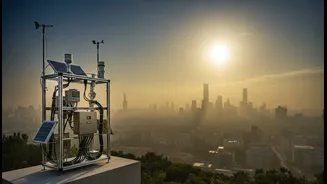
A major issue flagged by the 2026 report is not just the pollution itself, but our inability to see it fully. According to CSE's analysis, a staggering 85% of India's population—over 1.2 billion people—live outside the effective range of a continuous air quality monitor. This means that for the vast majority of citizens, the air they breathe is not being consistently measured, creating enormous blind spots. Monitoring remains concentrated in a few large metropolitan areas, leaving entire districts, industrial belts, and fast-growing towns without real-time data. This isn't just an information gap; the report terms it a form of "structural inequality," where the health risks in many parts of the country remain officially undocumented and unaddressed.
The Heavy Toll on Health
The consequences of breathing polluted air are severe and quantifiable. The latest data underscores that air pollution is the single largest external threat to human life in India. According to recent analyses cited in environmental reports, particulate pollution reduces the average Indian's life expectancy by approximately 3.5 years. The situation is even more dire in the country's most polluted regions. For residents of Delhi, the report states that life expectancy is shortened by as much as 8.2 years due to toxic air. This health burden is not just a future risk but a present-day reality, silently increasing the prevalence of heart disease, strokes, and chronic lung conditions across the population.
Are National Policies Working?
India's flagship National Clean Air Programme (NCAP), launched in 2019, aims to tackle this crisis. It set a revised target of reducing particulate matter concentrations in 131 non-attainment cities by 40% by 2026, using 2017 levels as a baseline. However, progress has been mixed and modest. A January 2026 progress report on NCAP showed that while many cities have seen some reduction in PM10 levels, a significant number still exceed the national safety standards. Other analyses show that out of 96 NCAP cities with sufficient data, 84 failed to meet national standards. Issues like underutilisation of funds and a disproportionate focus on surface-level issues like road dust, while neglecting industrial emissions, continue to hamper the programme's effectiveness.
Beyond Winter Smog and PM2.5
The conversation around air pollution in India has long been dominated by winter smog in the north and fine particulate matter (PM2.5). However, new analysis is broadening the focus. One emerging threat highlighted this year is ground-level ozone, a harmful pollutant formed when emissions from vehicles and industry react with sunlight and heat. Unlike particulate matter, ozone pollution is often worse in the summer. India now ranks third globally for exposure to ozone, which is emerging as a major respiratory threat. This highlights the need for a year-round, multi-pollutant strategy that moves beyond the traditional focus on winter pollution in the Indo-Gangetic Plain. The problem is not just seasonal or regional; it's a complex, nationwide challenge requiring a more sophisticated response.