








Satellite Data Analyst
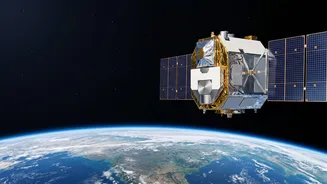
One of the fastest-growing fields in space technology is not in space at all, but right here on Earth, interpreting the data sent back. Satellite Data Analysts are professionals who process and make sense of the vast amounts of imagery and signals from
Earth observation satellites. Private companies like Pixxel and SatSure are hiring experts to turn this data into actionable insights for sectors like agriculture, urban planning, disaster management, and climate change monitoring. These roles require skills in geographic information systems (GIS), remote sensing, and data science. As India launches more satellites, the demand for people who can translate space-based data into business solutions is set to soar.
Space Lawyer and Policy Advisor
With hundreds of private companies now building and launching hardware, the 'Wild West' of space needs rules. Space Lawyers and Policy Advisors are becoming critical to the industry. These professionals help companies navigate the complex web of international treaties, national regulations, launch licensing, and liability issues. They work for startups like Skyroot and Agnikul, for government bodies like IN-SPACe which authorizes private space activities, and for firms specializing in aerospace law. As space becomes more commercialized, experts who can handle contracts, insurance, and intellectual property for space-based assets are indispensable.
Small Satellite Engineer
The future of space is getting smaller. The industry is seeing a massive shift towards small satellites (smallsats) and CubeSats, which are cheaper and faster to build and launch. This has created a demand for a new breed of Aerospace Engineer who specializes in miniaturized systems. Companies like Dhruva Space are leaders in this domain. Unlike traditional satellite development which can take years, smallsat engineers work in fast-paced environments, often developing and seeing their hardware fly in a fraction of the time. They handle everything from propulsion and avionics to the satellite's structure, all within a compact and efficient design.
Space Debris Mitigation Engineer
As space gets more crowded with satellites, 'space junk' or orbital debris has become a critical safety issue. Startups like Manastu Space and Digantara are focused on making space sustainable. This has created a new and vital career: the Space Debris Mitigation Engineer. These engineers work on technologies for 'space traffic management' and active debris removal. Their job involves designing green propulsion systems for satellites so they can de-orbit safely at the end of their life, building systems to track debris, and developing robotic technology to capture and remove junk from orbit. This is a field that combines robotics, propulsion engineering, and a mission to keep space accessible for future generations.
Aerospace Software Engineer
Modern space missions run on code. Aerospace Software Engineers are the architects behind the flight software, mission control systems, and autonomous navigation that guide rockets and satellites. With the rise of private companies, the demand for software skills is exploding. These roles require strong programming knowledge in languages like Python and C++, often applied to embedded systems. Unlike a typical IT job, these engineers write code that has to perform flawlessly in the harsh environment of space, controlling everything from a satellite's orientation to the complex analysis of data onboard. As spacecraft become more autonomous, the software engineer's role becomes even more central to mission success.