





A New Class of Power: What Is a Semicryogenic Engine?
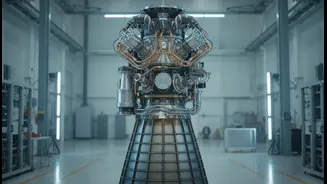
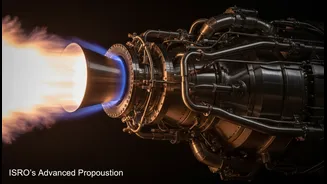
At its core, a semi-cryogenic engine is a liquid-propellant rocket engine that uses a specific fuel combination: highly refined kerosene (known as RP-1 or Isrosene) and liquid oxygen (LOX) as the oxidiser. This differs from ISRO's other powerful engines.
The Vikas engine, a workhorse of Indian rocketry, uses earth-storable liquid fuels, while cryogenic engines, used in the upper stages of the LVM3, use super-cooled liquid hydrogen. The key advantage of the semi-cryogenic approach is that kerosene is much denser than liquid hydrogen and can be stored at normal temperatures. This makes the fuel tanks smaller and the handling process simpler, reducing complexity and cost while still delivering immense power. Technology like this is complex and mastered by only a handful of nations, making its indigenous development a major achievement.
The Milestone Test: A Major Confidence Boost
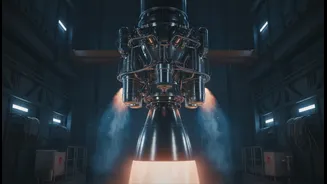
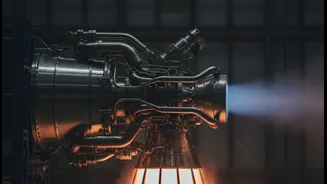
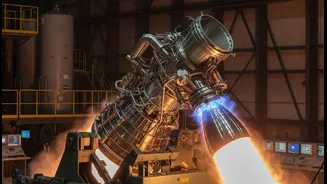
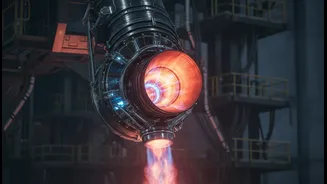
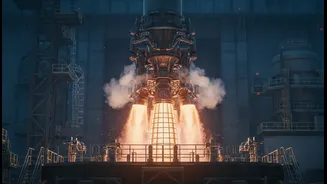
On June 24, 2026, at the ISRO Propulsion Complex in Mahendragiri, Tamil Nadu, engineers successfully conducted a hot test of the engine's Power Head Test Article (PHTA). This crucial component, which includes the powerful turbopumps, was fired up to a 175-tonne thrust level, which is 88% of its full target capacity of 200 tonnes. This was the eighth and most powerful test in a series, following previous successful tests at lower thrust levels. By demonstrating stable operation at such high power, ISRO has gained significant confidence to proceed with a full-thrust demonstration of the complete engine. This recent success validates the engine's design and brings it one step closer to being integrated into India's rockets.
The Payoff: Bigger Payloads and Cheaper Launches
The primary goal of the SE-2000 engine is to enhance India's launch capabilities significantly. This single engine is designed to replace the L110 core stage of India’s heaviest rocket, the LVM3, which is currently powered by two Vikas engines. The new semi-cryogenic stage, dubbed the SC120, will substantially increase the LVM3's payload capacity. It is expected to boost the rocket's ability to carry satellites to Geostationary Transfer Orbit (GTO) from the current four tonnes to five tonnes or more. This upgrade means India can launch heavier communication satellites for itself and for international customers, reducing reliance on foreign launch providers. Ultimately, this makes India more competitive in the multi-billion dollar global launch market.
For Engineering Students: A New Frontier in Aerospace
For students of mechanical, aerospace, and chemical engineering, the development of the SE-2000 is a landmark event. This engine operates on a complex oxidiser-rich staged combustion cycle, pushing the boundaries of material science and fluid dynamics with extremely high pressures and temperatures. The hardware, including advanced turbopumps and pre-burners, required indigenous solutions and partnerships with Indian industry to create. Mastering this technology opens up new avenues for research and development within India. It creates exciting career opportunities for a new generation of engineers who want to work on cutting-edge propulsion systems, reusable launch vehicles, and future interplanetary missions, all within the country.
For Launch Enthusiasts: What to Watch For Next
Space enthusiasts have much to look forward to. The semi-cryogenic engine is a key component of ISRO's future plans, including the Next Generation Launch Vehicle (NGLV), which aims to be a partially reusable rocket to replace the PSLV and GSLV. The immediate next step will be the full-power hot test of the complete SE-2000 engine at its full 200-tonne thrust. Following that, the engine and the new SC120 stage will undergo flight qualification tests before their first developmental flight. While it will not be used on the initial Gaganyaan human spaceflight missions due to development timelines, this engine is foundational for the future of Indian heavy-lift rocketry. Its successful integration will herald a new era of more powerful and capable rockets lifting off from Indian soil.