





The Mission at a Glance
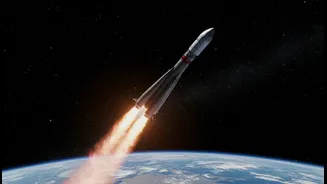
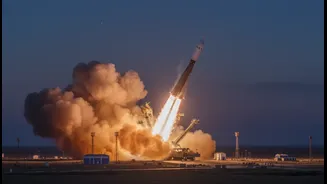
On Tuesday, NASA astronaut Anil Menon is scheduled to launch from the Baikonur Cosmodrome in Kazakhstan, a site steeped in space history. He will be joined by two Roscosmos cosmonauts, Pyotr Dubrov and Anna Kikina, aboard the Soyuz MS-29 spacecraft. Their
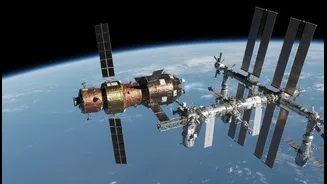
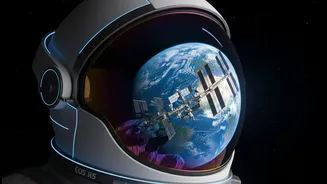
destination is the International Space Station (ISS), a sprawling orbital laboratory that has been continuously inhabited for over two decades. This will be Menon's first spaceflight since being selected as a NASA astronaut in 2021. The trio will join the Expedition 74 crew for an approximately eight-month mission, conducting a host of scientific experiments before their planned return in April 2027.
The Geopolitics of a Rocket Launch
The sight of an American astronaut launching on a Russian rocket might seem unusual, especially given current geopolitical tensions. However, this is part of a long-standing collaboration essential for the ISS. After NASA's Space Shuttle program retired in 2011, the Soyuz became the only way for astronauts from all nations to reach the station for nearly a decade. With the advent of American commercial crew vehicles like SpaceX's Crew Dragon, NASA regained its own launch capability. Yet, the agency continues a 'seat swap' practice, placing its astronauts on Soyuz flights and Russian cosmonauts on American ones. This ensures that at all times, both American and Russian crew are on the station to operate their respective segments, providing a crucial redundancy if either nation's spacecraft were grounded. It’s a pragmatic arrangement that keeps the vital international partnership—and the station itself—running smoothly.
The Calculated Risks of Soyuz
Spaceflight is inherently dangerous, and the Soyuz, for all its history, is no exception. The rocket family has been flying since the 1960s and has a largely reliable track record, often cited as a workhorse of space travel. However, it has experienced failures. The program suffered two fatal accidents in its early days, in 1967 and 1971. More recently, a dramatic launch abort in 2018 saw the capsule's emergency escape system successfully save the crew after a booster failed. While this incident highlighted the risks, it also proved the effectiveness of the Soyuz's safety systems. Beyond the technical, there is a political risk in relying on a partnership that can be strained by events on Earth. Yet for now, the technical cooperation in space continues, built on decades of mutual dependence.
The Scientific and Strategic Payoff
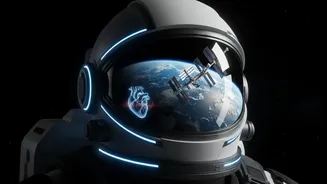
The benefits of sending astronauts like Anil Menon to the ISS are immense. As an emergency physician and US Space Force colonel, Menon's mission is packed with research. He will conduct studies on how microgravity affects human veins and blood flow, test methods for producing IV fluids from the station's water supply, and work on refining the in-space manufacturing of semiconductor crystals. This research has direct benefits for life on Earth—improving medical devices and computer technology—and helps prepare for future long-duration missions to the Moon and Mars. Strategically, the mission reaffirms the value of the ISS as a platform for peaceful international collaboration, a venture designed to be so interdependent that no single country can operate it alone.
What This Launch Means for You
It can be easy to view a space launch as a distant, high-tech event, but missions like Soyuz MS-29 have a real impact. The scientific work performed aboard the ISS often leads to advancements that find their way into our daily lives, from medical technology to consumer electronics. This launch is also a powerful symbol. In a world of divisions, the ISS partnership demonstrates that countries can work together on complex, long-term goals for the advancement of all humanity. Watching astronauts from different nations work together in the challenging environment of space offers a potent reminder of what is possible through cooperation. For the next eight months, Anil Menon will be living and working in this symbol of unity, pushing the boundaries of science for the benefit of everyone back on Earth.