


What is GRAP?
The Graded Response Action Plan, or GRAP, is an emergency response mechanism that kicks in to prevent further deterioration of air quality in the Delhi-NCR region. It was first notified by the Environment Ministry in 2017 following a Supreme Court order.
Think of it as a series of colour-coded alerts for air quality, each with a pre-planned set of actions. The plan is implemented by the Commission for Air Quality Management (CAQM), a statutory body responsible for air quality in the region. The system is divided into four stages based on the Air Quality Index (AQI): Stage 1 ('Poor' AQI: 201-300), Stage 2 ('Very Poor' AQI: 301-400), Stage 3 ('Severe' AQI: 401-450), and Stage 4 ('Severe+' AQI: above 450). The measures are incremental, meaning the rules from Stage 1 continue to apply even if Stage 2 is activated.
Why Stage 1 Is Now Active
Stage 1 of GRAP is triggered when the AQI slides into the 'Poor' category. On October 21, Delhi's AQI rose sharply to 244 from 179 the previous day, prompting the CAQM to enforce the first level of restrictions. This is a pre-emptive step. Forecasts indicated that the air quality was likely to remain in the 'poor' category for the coming days due to changing weather conditions that hinder the dispersal of pollutants. By activating GRAP-1, the CAQM aims to curb pollution at the source before it escalates to more hazardous 'Very Poor' or 'Severe' levels.
New Rules For Construction Sites
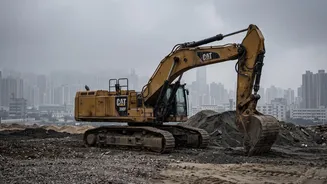
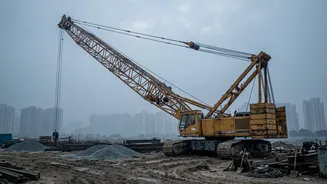
The construction and demolition (C&D) sector is a major contributor to particulate matter pollution, and it’s one of the first areas to face scrutiny under GRAP-1. While an outright ban on construction is not part of this initial stage, strict dust control measures are now mandatory. All C&D sites must ensure materials and waste are properly covered. Transporting C&D waste is only allowed in fully covered vehicles. For larger projects on plots of 500 square metres or more, registration on a government web portal for monitoring is required, and anti-smog guns and water sprinklers must be used to suppress dust. The goal is to contain dust at its source and prevent it from becoming airborne.
Impact On Traffic And Commuting
For the average commuter, GRAP-1 brings a renewed focus on vehicle emissions. While there is no general ban on private cars or an odd-even scheme at this stage, authorities will intensify enforcement of existing rules. This means a strict crackdown on visibly polluting vehicles, which can be penalised or even impounded. All vehicle owners must carry a valid Pollution Under Control (PUC) certificate, as roadside checks will become more frequent. Furthermore, standing restrictions on older vehicles — diesel vehicles over 10 years old and petrol vehicles over 15 years old — will be strictly enforced. To ease congestion, non-destined truck traffic will be diverted away from Delhi via the peripheral expressways, and inter-state buses entering the capital must be electric, CNG, or BS-VI compliant.
Other Key Restrictions To Know
Beyond traffic and construction, GRAP-1 includes several other important measures. There is a complete ban on the open burning of any kind of waste, including garbage and biomass. Authorities will also increase the frequency of mechanised road sweeping and water sprinkling to control road dust. Another significant directive is the ban on using coal or firewood in 'tandoors' at hotels, restaurants, and other eateries; they must switch to cleaner fuels like electricity or gas. The use of diesel generator sets is also restricted and is only permitted for essential or emergency services, not as a regular power source.