



What is a Planetary Conjunction?
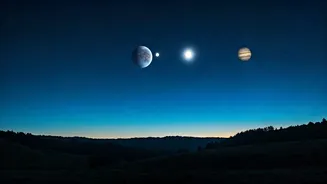
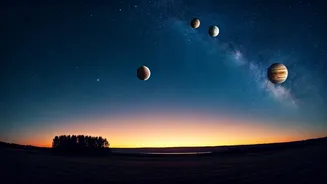
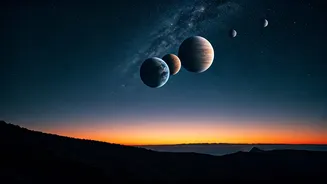
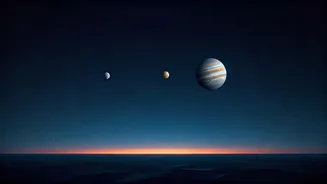
In simple terms, a planetary conjunction is an event where two or more planets appear to be very close to each other in the sky from our perspective on Earth. They aren't actually close in space, of course—the planets remain hundreds of millions of kilometres
apart. It’s a trick of orbital mechanics and our line of sight. Think of it like seeing two distant streetlights line up perfectly as you drive past, making them look like a single, brighter light for a moment. These events are not just beautiful; they have captivated humanity for millennia, often seen as omens or significant celestial markers long before we understood the science behind them.
The Stars of Tonight's Show
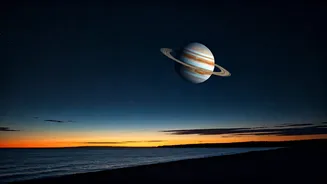
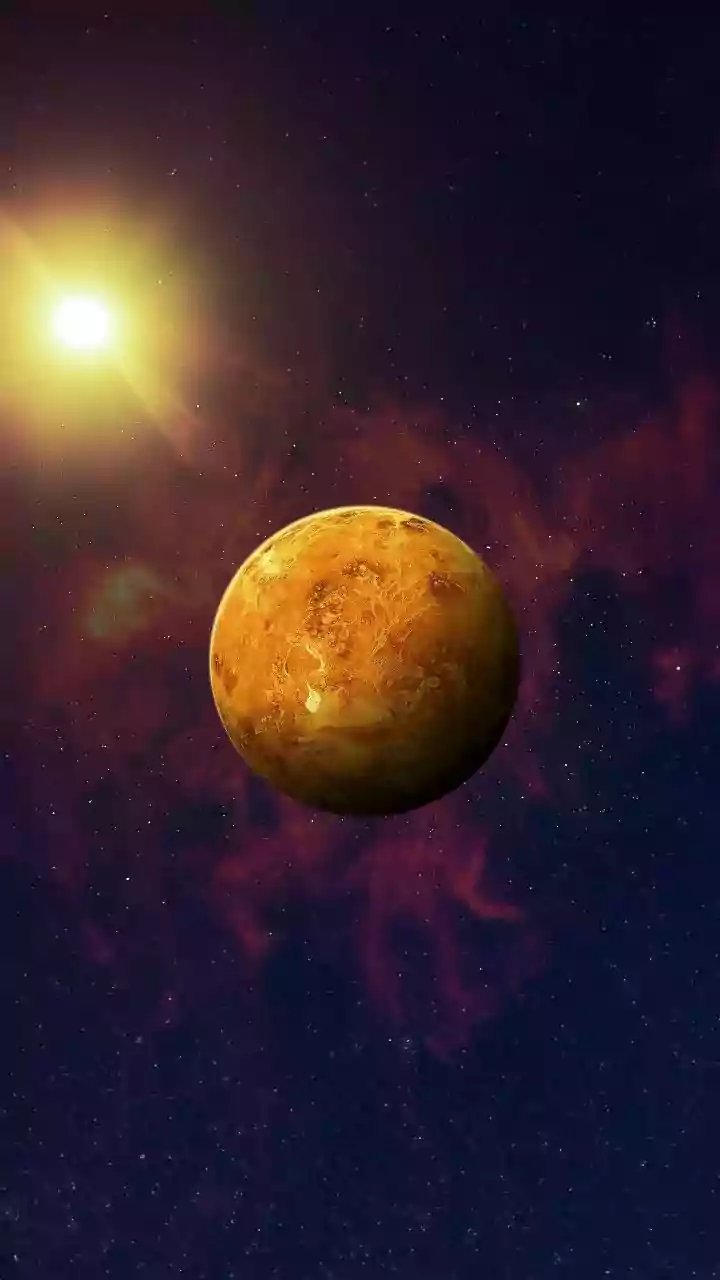
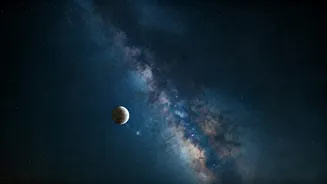
Tonight's main attractions are Venus and Jupiter. Venus, often called the 'Evening Star', is the brightest object in our night sky after the Moon, thanks to its thick, reflective cloud cover. It will appear as a brilliant, steady beacon of white light. Joining it is Jupiter, the largest planet in our solar system. Though farther away, its immense size makes it the second brightest planet visible to us. It will look like a very bright, cream-coloured star. Seeing these two celestial giants appear side-by-side is a fantastic opportunity, as their combined brightness will create a truly spectacular sight, easily visible even from city suburbs with moderate light pollution.
When and Where to Look in India
Timing is everything for this event. The best viewing window will begin about 30 to 45 minutes after sunset, once the sky has darkened enough for the planets to pop. Look towards the western horizon—the same direction where the sun just set. The duo will be relatively low in the sky, so an unobstructed view is key. For most of India, this means looking between approximately 7:15 PM and 8:30 PM IST. After that, the planets will sink below the horizon. If you're in Mumbai, Delhi, Kolkata, or Chennai, your sunset times are similar enough that this window applies broadly. The key is to be ready as dusk settles. Don't wait too long, or they'll be gone.
How to Get the Best View
The best part about this conjunction is that you don’t need any special equipment. Both Venus and Jupiter are bright enough to be seen with the naked eye. Just find a spot with a clear view of the western sky, away from tall buildings or trees. Let your eyes adjust to the darkness for about 15 minutes to improve your night vision. If you have a pair of binoculars, you'll be in for an even bigger treat. Binoculars will not only make the planets appear brighter but may also reveal Jupiter’s four largest moons—Io, Europa, Ganymede, and Callisto—as tiny pinpricks of light flanking the giant planet. A telescope would, of course, offer even more detail, potentially showing the cloud bands of Jupiter.
Why This Moment Matters
While planetary conjunctions happen with some regularity, close pairings of the two brightest planets are always a noteworthy event. They serve as a powerful and humbling reminder of the vast, clockwork-like nature of our solar system. For a brief period, you can witness the orbital paths of distant worlds aligning from your own backyard. It’s a moment of connection to the cosmos that requires nothing more than stepping outside and looking up. In a busy world, taking a few minutes to watch a celestial event that has been unfolding for billions of years can be a deeply rewarding experience.