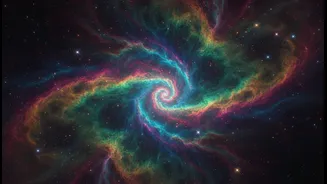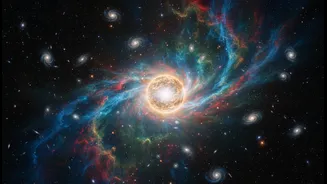



What Are 'Red Space' Images?
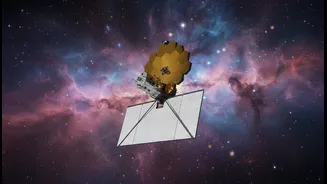
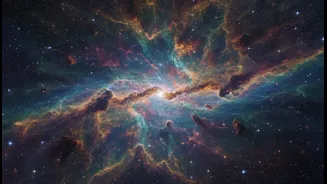
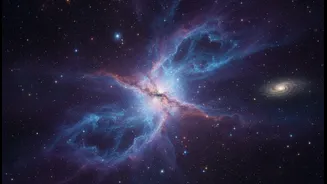
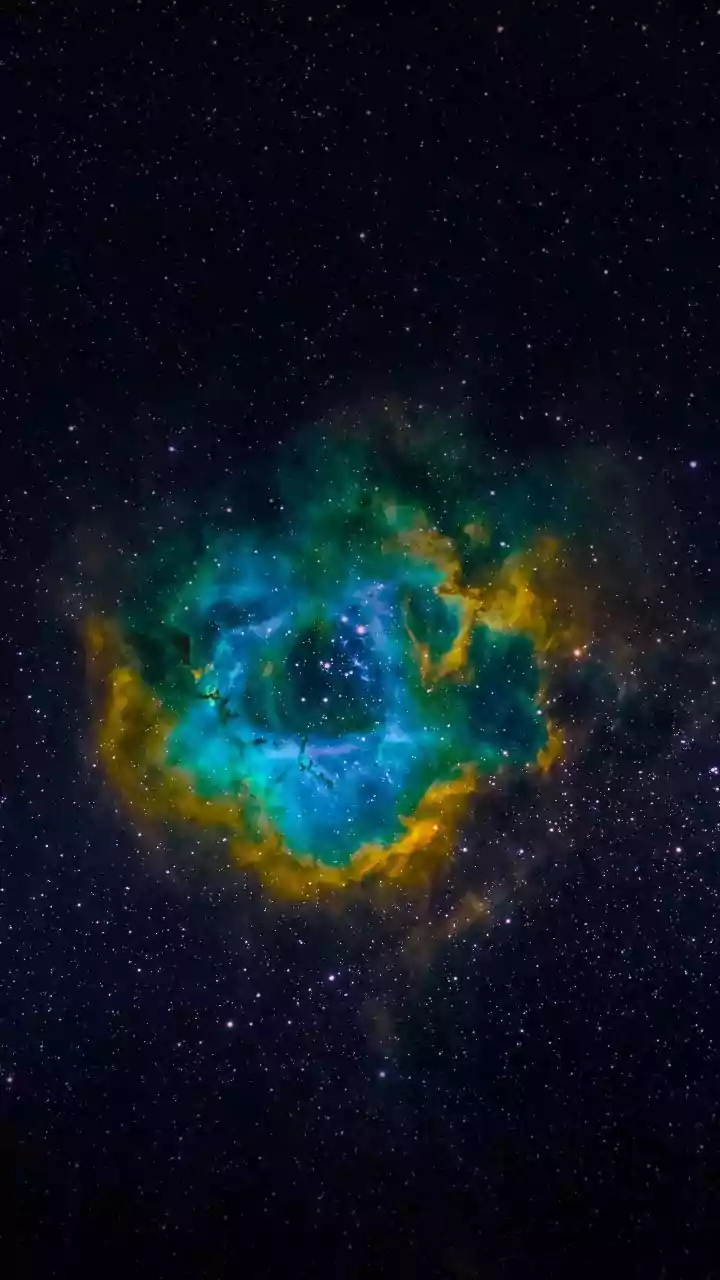
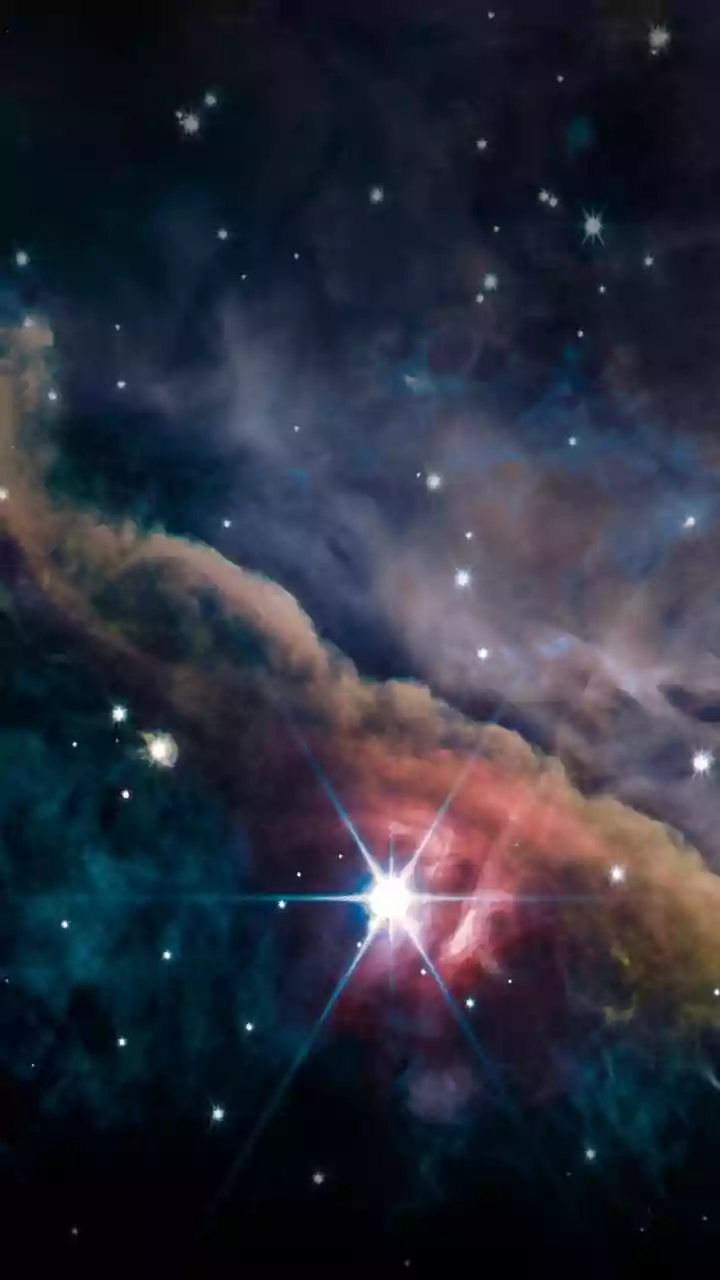
The headline's 'Red Space' is a nod to the breathtaking images captured by powerful telescopes like NASA's James Webb Space Telescope (JWST) and the Chandra X-ray Observatory. Many of these cosmic portraits appear in vibrant shades of red and orange.
This isn't because space is actually red, but because these telescopes often see in infrared light, which is invisible to the human eye. Scientists assign colors to different wavelengths of light to make the invisible visible, a technique called false-color imaging. Red is often used to represent lower-energy or longer-wavelength light, which can penetrate through thick cosmic dust clouds to reveal newborn stars and distant galaxies that would otherwise be hidden. These images provide an unprecedented look at the universe's most dynamic and mysterious phenomena.
Entering 'Classroom Mode'
The move to 'Classroom Mode' means these scientifically rich images are being packaged into accessible educational resources for students of all ages. Organizations like NASA and the Space Telescope Science Institute have launched initiatives to bring space science to life. This includes developing free, standards-aligned lesson plans, printable materials, interactive activities, and even virtual platforms where students can explore the cosmos. For example, NASA's STEM Toolkit for the Webb telescope offers resources organized by grade level, allowing teachers to easily incorporate space imagery into their lessons, whether for a quick warm-up or an in-depth project. In India, ISRO has also established programs like YUVIKA to give students hands-on knowledge of space technology and its applications.
More Than Just Pretty Pictures
These educational modules go far beyond simple stargazing. They are designed to teach fundamental concepts in Science, Technology, Engineering, and Mathematics (STEM). A single image of a nebula can become a lesson in the life cycle of stars, chemistry, and physics. Activities might involve students learning to decode image data like a real scientist, using simple art supplies to create their own multi-wavelength composites, or using online tools to analyze data sets. By engaging with these resources, students learn how astronomers use light and color to understand temperature, composition, and distance in the universe. It transforms abstract scientific principles into tangible, visually compelling stories.
Inspiring the Next Generation
The ultimate goal of these programs is to spark curiosity and inspire the next generation of scientists, engineers, and innovators. By bringing the frontiers of space exploration into the classroom, educators can show students that careers in space science are attainable. For many students, these stunning images are their first real encounter with telescopic science, igniting a passion that can last a lifetime. Initiatives in India, such as ISRO's student satellite programs, further this goal by providing university students with opportunities to design and build their own payloads, fostering practical skills and preparing them to contribute to the nation's space ambitions.
How Educators Can Get Involved
For teachers in India and around the world, accessing these resources has never been easier. Many materials are available for free online. NASA's websites for its major observatories—like Chandra, Hubble, and Webb—have dedicated sections for educators with downloadable activities, posters, and guides. The NASA STEM Toolkit and Webb Virtual Platform are excellent starting points for structured lesson plans. Similarly, ISRO's STEM portal offers a range of activities, online courses, and interactive sessions for students. These resources are designed to be user-friendly, supporting teachers who may not have a deep background in astronomy but want to share the wonder of the cosmos with their students.