



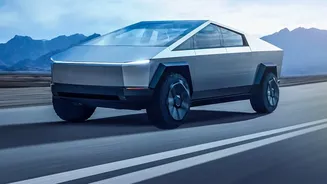
Tesla is making a significant pivot at its Texas Gigafactory, shifting focus from the much-hyped Cybertruck to its next-generation Robotaxi. This move signals a profound change in strategy, prioritizing autonomous mobility over niche consumer vehicles.
The End of a Production Era for Cybertruck
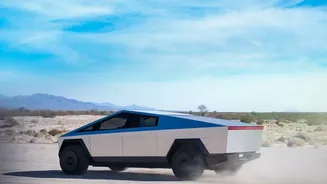
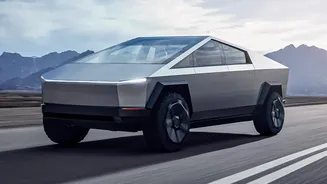
In a surprise announcement on November 6, 2026, CEO Elon Musk confirmed that Tesla will begin winding down production of the Cybertruck at its Texas factory around the middle of 2027. The decision is a direct result of a strategic choice to reallocate factory space and resources to ramp up manufacturing of the 'Cybercab', Tesla's purpose-built, two-seat autonomous vehicle. The Texas plant is currently the only facility that produces the Cybertruck, and while Musk has not confirmed if production will cease entirely or move elsewhere, the specialized tooling required for its stainless-steel body makes a transfer unlikely. This marks a major retreat from a flagship project that once garnered over a million reservations and projected annual sales of 250,000 to 500,000 units.
From Niche Product to Strategic Pivot
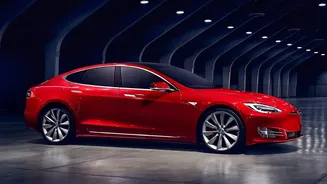
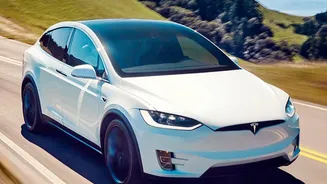
The Cybertruck's journey has been a challenging one since its first deliveries in late 2023. Despite its radical design, the electric pickup struggled with weaker-than-expected sales, production difficulties, and a series of recalls. Sales in the U.S. dropped from nearly 39,000 units in 2024 to just over 20,000 in 2025, with a continued decline in 2026. The high starting price and polarizing design limited its appeal beyond a niche market. The pivot to the Cybercab reflects a broader shift within Tesla, moving from being solely an electric car manufacturer to a company focused on artificial intelligence, robotics, and autonomous transportation. This decision follows the earlier discontinuation of the Model S and Model X, further concentrating Tesla's efforts on its highest-volume and future-facing products.
Enter the Cybercab and 'Unboxed' Manufacturing
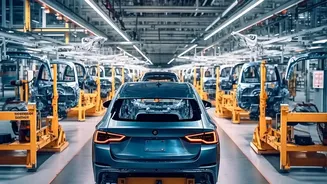
The vehicle at the center of this shift is the Cybercab, a compact, two-seat taxi with no steering wheel or pedals, first unveiled in 2024. Designed exclusively for autonomous ride-hailing, Tesla has already begun paid service in Austin, Texas, and plans to expand to other cities. The key to scaling its production is a revolutionary 'unboxed' manufacturing process. This method breaks from the traditional assembly line, where a car body moves sequentially. Instead, Tesla builds separate vehicle modules—like the front, rear, and chassis—in parallel. Workers and robots have open, 360-degree access to install components before the final sections are joined together at the end. Musk claims this method, which also eliminates the need for a traditional paint shop, will be drastically faster and more efficient, allowing Tesla to build a Cybercab every 5 to 10 seconds.
The Road Ahead for Robotaxis
Tesla's bet is that the future of transportation lies in autonomous fleets owned and operated by the company, generating recurring revenue from rides rather than one-time vehicle sales. While Tesla plans to make a limited number of Cybercabs available for customer purchase by the end of 2026, Musk has stated that the vast majority will be owned by Tesla. The company is already making engineering refinements, with Musk recently announcing plans for a more efficient Cybercab with a smaller 40kWh battery pack and a new 'liquid silver' color option. However, the path to a fully autonomous network is not without obstacles. The technology faces significant regulatory and safety hurdles that must be overcome for widespread commercial deployment. Investors, for now, seem to have responded positively to the sharpened focus, with Tesla's stock rising after the announcement.