

From the pale sky blue of a freshly dyed cotton kurta to the deep, near-black of a Kutch shawl, indigo tells a story in shades of blue. But how does a single dye produce such a rich and varied palette? The secret lies in a magical transformation.
A Pigment That Hides
Unlike
many natural dyes that you can simply boil and use, indigo is a paradox. The dye molecule, called indigotin, is completely insoluble in water. You could steep indigo leaves for days and the blue pigment would never properly dissolve to stain a fabric. The colour is locked away inside the plant, hidden as a colourless compound called indican. The journey to blue, therefore, isn't one of simple extraction, but of remarkable chemical transformation. This process, perfected over millennia in India, turns an insoluble blue powder into a liquid that fabric can absorb.
The Chemistry of Transformation
To make indigo dye work, artisans must change its chemical structure through a process called reduction. The insoluble indigo powder is added to an alkaline vat (with a high pH) along with a reducing agent, which removes oxygen from the dye molecules. Historically, this was done through natural fermentation using ingredients like dates or bananas. This converts the blue indigotin into a new, water-soluble form called 'leuco-indigo', which is a surprising greenish-yellow colour. When fabric is submerged in this vat, it soaks up the soluble, non-blue dye.
The Magic of Oxygen
The most visually stunning part of the process happens when the fabric is pulled out of the vat. Appearing yellowish-green at first, it begins to change colour right before your eyes. As the leuco-indigo on the fibres comes into contact with oxygen in the air, a reverse chemical reaction called oxidation occurs. The dye molecules revert to their original insoluble blue form (indigotin), now physically trapped within the fibres of the textile. This is why indigo doesn't just coat the surface; it becomes a part of the fabric itself, leading to its famous and graceful fading over time.
Building Layers of Blue
So how are different shades created? It’s not by making a stronger or weaker dye bath. The secret to achieving everything from a light wash to a deep navy is the number of dips. A single, quick dip and oxidation cycle results in a pale, sky blue. For a deeper, more saturated colour, the fabric is dipped, oxidized, and then dipped again, sometimes up to 15 or 20 times. Each immersion adds another layer of indigo to the fibres, gradually building the intensity of the blue. Artisans carefully control the number and duration of these dips to achieve the precise shade they desire.
The Artistry of Resist
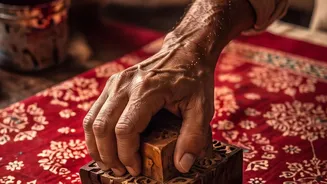
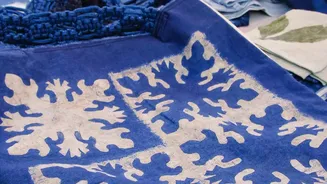
The varied shades are also a product of traditional patterning techniques. Crafts like Bandhani from Gujarat and Rajasthan involve tying the fabric tightly with thread in intricate patterns. These tied sections 'resist' the dye, remaining untouched by the indigo while the exposed fabric turns blue. Similarly, in Ajrakh block printing, a resist paste is printed onto the cloth to block the dye. When the resists are removed, they reveal stunning patterns against the dyed background. These methods, combined with the layered dipping process, allow for an infinite variety of designs and tones on a single piece of cloth.