


Preparing For Your Night Out
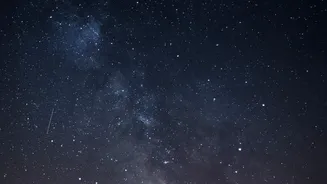
The best stargazing happens away from city lights. Find the darkest spot you can, even if it's just a corner of your backyard with the porch lights off. Give your eyes at least 20-30 minutes to fully adapt to the darkness; you'll be amazed at how many
more stars appear. If you use a star map app on your phone, switch it to red-light mode to preserve your night vision. Dressing in warm layers and having a comfortable chair will make the experience much more enjoyable. Remember, the only tool you truly need is patience.
Planets on Parade: Saturn and Jupiter
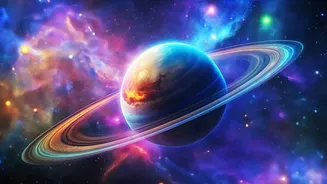
October 2026 is a fantastic month for planet spotting. The star of the show is Saturn, which reaches opposition on October 4. This means it's at its brightest and visible for most of the night, rising in the east around sunset. It will appear as a steady, yellowish point of light. While you won't see its famous rings without a telescope, knowing you're looking at the ringed giant is a thrill in itself. Early risers get a treat too, as bright Jupiter dominates the morning sky, rising in the east after 2 a.m. On the morning of October 6, a thin crescent Moon will pass very close to Jupiter, making for a beautiful pairing.
First Meteor Shower: The Draconids
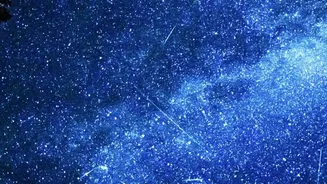
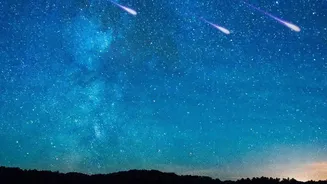
The first of two meteor showers this month is the Draconids, peaking on the night of October 8-9. Unlike most showers that are best after midnight, the Draconids are best viewed in the evening, just after nightfall. This is a minor shower, typically producing about 5 to 10 slow-moving meteors per hour in ideal conditions. The good news for 2026 is that the peak happens with a nearly new moon, meaning skies will be dark and perfect for spotting these faint streaks. The meteors will appear to radiate from the constellation Draco the Dragon, but you can see them anywhere in the sky.
Main Event: The Orionid Meteor Shower
The more active Orionid meteor shower peaks on the night of October 21-22. The Orionids are special because they are leftover debris from the famous Halley's Comet. You can expect to see between 15 and 25 meteors per hour under dark skies. These meteors are known for being fast and can sometimes leave bright, persistent trails. The Moon will be quite bright during the early part of the night, but it sets a few hours before dawn. This creates a perfect window of dark-sky viewing between moonset and the start of twilight.
Finding Autumn's Star Patterns
Constellations are the roadmaps of the night sky. This month, look for the Great Square of Pegasus, a large box of four bright stars high in the southern sky. Following an imaginary line from two corners of the square can lead you to the Andromeda Galaxy, which appears as a faint, fuzzy smudge to the naked eye under very dark skies. Also prominent is Cassiopeia, shaped like a distinct 'W' or 'M' in the northern sky. Learning to spot these key patterns is the first step to becoming a seasoned skywatcher.