

The Decade of Height and Freedom
The 1970s marked a significant departure from the rigid, heavily sprayed styles of the 1960s. As social movements championed individuality, hair became a symbol of personal freedom. This era embraced movement, texture, and a more natural feel. But 'natural'
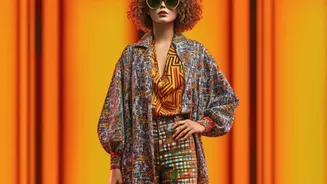
didn't mean flat. On the contrary, one of the defining features that unified many of the decade's diverse looks—from feathered flicks to rebellious shags—was deliberate volume, specifically at the crown of the head. This lift was the unspoken ingredient that provided structure, glamour, and a touch of drama to an otherwise relaxed aesthetic.
Why the Crown Was King
Focusing volume at the crown was a clever styling principle with powerful results. Lifting the roots at the top of the head creates an elongating effect, drawing the eye upward and framing the face beautifully. This technique was central to achieving the 'winged' or 'feathered' silhouettes that became so popular. Styles like the Shag, popularized by Jane Fonda, and the Wedge, made famous by skater Dorothy Hamill, both relied on shorter layers and volume at the crown to create their signature shape. It was a versatile trick that could be adapted for soft, glamorous looks or edgy, rock-and-roll styles, proving its universal appeal.
Iconic Styles That Mastered the Lift
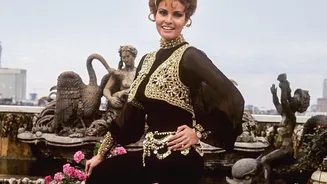
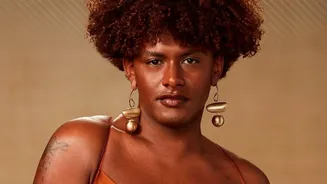
Several legendary hairstyles are perfect examples of the 'crown volume' rule. The most famous is arguably the 'Farrah Flip', sported by Charlie's Angels star Farrah Fawcett. Her style featured bouncy, feathered layers curled away from the face, with significant height at the crown that made the look iconic. The Shag haircut, worn by stars like Jane Fonda and Joan Jett, was defined by its choppy layers, which were shortest around the crown to build natural volume. Even the era's stunning Afros, celebrated by icons like Diana Ross and Pam Grier, were a powerful statement of natural volume and shape. Similarly, the high ponytail with a voluminous 'poof' at the crown was a go-to glamorous look for Cher and Raquel Welch.
The Original Toolkit: How They Did It Then
Achieving that 70s volume was an art form that relied on a few key tools and techniques. Backcombing, or 'teasing', was a primary method for creating a cushioned lift at the roots. Stylists would take sections of hair at the crown and gently comb them down towards the scalp to build a foundation of volume. Another essential tool was a set of hot rollers or large-barrel curling irons. Hair would be curled away from the face, and the sections at the crown were often rolled to sit directly on top of the head to maximize root lift. Finally, a generous mist of strong-hold hairspray was used to lock everything in place, ensuring the style held its shape from the disco floor to the next day.
Modernising the Volume for Today
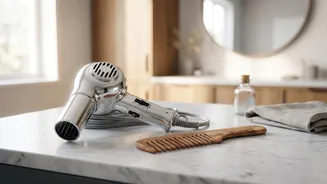
Today, you can recreate that 70s lift without the stiff, helmet-like feel. Modern techniques and products offer a softer, more touchable finish. Start with a volumizing mousse or root-lifting spray on damp hair, focusing the product at the crown. When blow-drying, flip your head upside down to dry the roots, encouraging them to lift away from the scalp. For a more targeted approach, lift sections of hair at the crown and aim the blow-dryer's nozzle upwards from underneath. Instead of traditional hot rollers, you can use large velcro rollers on nearly dry hair at the crown; they create gentle lift without intense heat. A large round brush is also your best friend for pulling the roots upward while drying to create lasting, bouncy volume.