





A Partnership Years in the Making
The space collaboration between India and the United States is not new, but its recent acceleration marks a significant strategic shift. What began decades ago with educational satellite programs has blossomed into a comprehensive partnership covering
advanced scientific research, human spaceflight, and commercial enterprise. This renewed momentum is formalized through a series of key agreements, including the Initiative on Critical and Emerging Technology (iCET) and India's decision to join the Artemis Accords. By signing the Artemis Accords in June 2023, India aligned itself with a U.S.-led framework for peaceful and transparent lunar exploration, joining dozens of other nations. This move signifies a departure from India's traditional preference for complete autonomy in space, signaling a strategic choice to collaborate with global partners to accelerate its ambitions and avoid technological isolation.
Eyes on Earth: The NISAR Mission
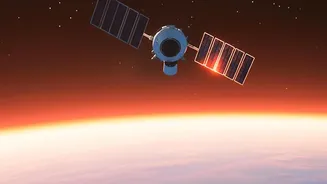
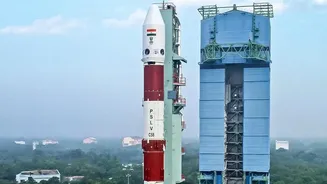
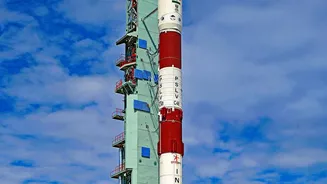
The most significant joint project to date is the NASA-ISRO Synthetic Aperture Radar (NISAR) mission, which launched in mid-2025. This state-of-the-art Earth observation satellite is the first of its kind, equipped with dual-frequency L-band and S-band radar systems provided by NASA and ISRO respectively. NISAR is designed to systematically map our planet every 12 days, providing unprecedented detail on changes in Earth's surface. Its ability to see through clouds and operate day or night makes it a revolutionary tool for monitoring climate change impacts like melting glaciers and rising sea levels. The data, which became publicly available in 2026, is already transforming our understanding of ecosystem disturbances, volcanic activity, and groundwater supplies, proving invaluable for disaster management and scientific research worldwide.
To the Moon and Beyond
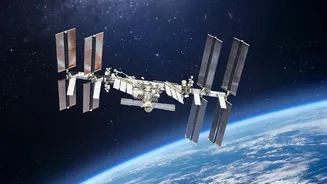
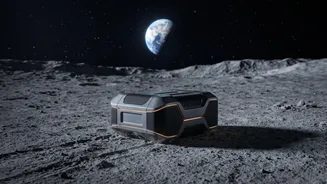
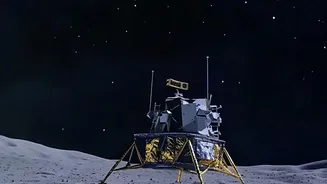
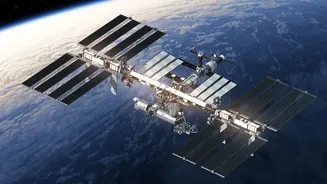
India’s participation in the Artemis Accords paves the way for deeper involvement in humanity's return to the Moon. A major development in this partnership is a planned joint mission to the International Space Station (ISS). As part of this collaboration, Indian astronaut-designates have undergone advanced training at NASA's Johnson Space Center in Houston, preparing for a mission that marks a historic first for the two countries. Beyond the ISS, NASA has also formally invited ISRO to collaborate on its ambitious Moon Base program, which aims to establish a permanent human outpost on the lunar surface. This aligns perfectly with India's own long-term goals, which include a crewed lunar landing by 2040 and the establishment of the Bharatiya Antariksh Station. This cooperation ensures that Indian systems are interoperable with global standards and provides ISRO access to invaluable data and best practices from crewed missions.
Fueling a New Space Economy
This partnership is not just about government agencies; it's a major catalyst for the commercial space sectors in both countries. India has recently opened its space industry to 100% foreign direct investment in satellite manufacturing, creating massive opportunities for U.S. companies. Initiatives like INDUS-X and the India-U.S. Strategic Trade Dialogue are designed to connect the private sectors of both nations, fostering collaboration in everything from satellite components to launch services. India’s private space ecosystem has seen explosive growth, with its value projected to reach nearly $77 billion by 2030. This synergy allows ISRO to focus on large-scale exploration missions, while startups and established companies drive innovation and scale up India's industrial capacity, making the nation an increasingly crucial player in the global space economy.