






An Immersion for the Senses
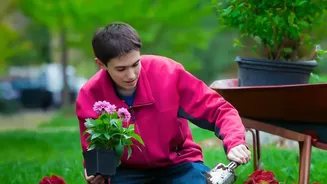
Mindfulness begins with paying attention to the here and now, and a garden is a rich environment for sensory engagement. It’s more than just looking at pretty flowers; it’s about fully experiencing your surroundings. The feeling of cool, crumbly soil
in your hands, the distinct scent of tomato leaves or fresh mint, and the subtle sounds of a breeze rustling leaves or birds chirping nearby all pull your focus away from abstract worries and into the physical world. This multi-sensory experience makes it difficult to ruminate on past events or future anxieties, effectively anchoring your awareness in the present. Engaging your senses—touch, smell, sight, sound, and even taste with edible plants—is a foundational practice of mindfulness that gardening offers naturally.
A Masterclass in Patience and Acceptance
In a world of instant gratification, gardening teaches a vital, counter-cultural lesson: some things cannot be rushed. Plants grow according to their own timeline, guided by seasons and weather, not by our demands. This process cultivates a deep sense of patience. You learn to wait, observe, and trust the natural cycle of growth. Furthermore, gardening is an exercise in acceptance. Not every seed will sprout, pests may arrive uninvited, and a sudden storm can flatten your hard work. These moments teach you to let go of the illusion of control and adapt to imperfections. This mirrors a core principle of mindfulness: acknowledging what is, without judgment or resistance, and finding peace in the process rather than in a perfect outcome.
Rhythmic Motion as Active Meditation
Many mindfulness practices involve finding a state of ‘flow’, where you are completely absorbed in an activity. The repetitive, physical tasks of gardening—such as weeding, digging, watering, or pruning—are perfect for inducing this meditative state. The rhythmic motion allows your mind to quiet down, much like knitting or walking can. Your body is engaged in a simple, purposeful action, which frees your brain from its usual cycle of overthinking. This form of active meditation reduces stress and anxiety by providing a calming, focused outlet. Studies have shown that the physical engagement combined with a serene connection to nature helps lower levels of cortisol, the body’s primary stress hormone, leading to improved mood and mental clarity.
Fostering a Sense of Nurturing and Purpose
Caring for a living thing, however small, can provide a powerful emotional and psychological boost. Tending to plants instills a sense of purpose, responsibility, and achievement that can counteract feelings of helplessness or stagnation. Watching something thrive because of your care and attention is deeply rewarding and can bolster self-esteem. This act of nurturing connects us to a gentle, compassionate part of ourselves. For many, this simple relationship—providing water, sunlight, and care, and seeing a plant respond—offers small but meaningful moments of success. It’s a quiet reminder that your actions matter and can create growth and beauty in the world.
A Deeper Connection to Natural Cycles
Engaging with a garden connects you to the fundamental rhythms of life, death, and renewal. Observing the full life cycle of a plant—from a tiny seed to a flourishing bloom and eventually to decay, which enriches the soil for future growth—provides a powerful perspective on your own life. It serves as a tangible reminder that all things are part of a larger cycle and that change is natural and necessary. This connection can make personal anxieties seem smaller and more manageable. Research has also shown that direct contact with soil can have a positive effect on mood, as a specific soil bacterium, Mycobacterium vaccae, may trigger the release of serotonin in the brain, a natural antidepressant.