








An Exotic Wonder from a Cactus
That otherworldly fruit is called pitaya or pitahaya, but it’s more famously known as dragon fruit, a name it earned around 1963 for its dramatic, scale-like exterior. Despite its exotic appearance, it’s not from a mythical lair but from the Hylocereus
cactus, a plant native to southern Mexico and Central America. The plant's flowers are also a spectacle, blooming only for a single night. From these night-blooming flowers comes the fruit that is now cultivated in tropical regions all over the world, becoming a favourite in Southeast Asia and gaining popularity everywhere.
A Taste of the Unexpected
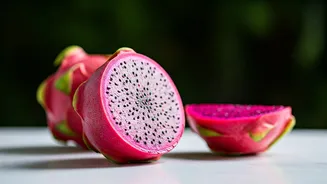
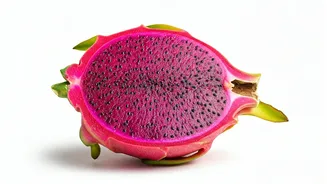
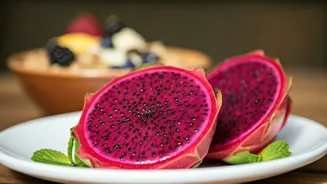
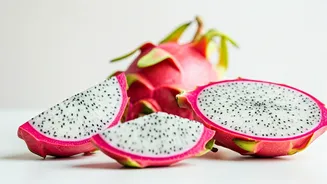
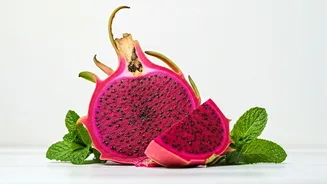
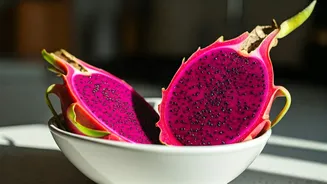
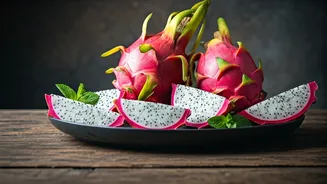
Cutting into a dragon fruit reveals a beautiful sight: a scoopable flesh, typically white or a vivid magenta, speckled with tiny, edible black seeds. Its taste is often a pleasant surprise to newcomers because its dramatic exterior belies a mild, subtly sweet flavour. Many describe it as a cross between a pear and a kiwi, with a soft, juicy texture similar to a ripe kiwi. There are several varieties. The most common has pink skin and white flesh, which has the mildest taste. The variety with red or magenta flesh is often rounder and sweeter, with a hint of berry flavour. The yellow-skinned variety is generally considered the sweetest of all.
More Than Just a Pretty Face
Beyond its looks and refreshing taste, dragon fruit is a nutritious choice. It's a low-calorie fruit packed with fibre, which is great for digestive health. It’s also a good source of several antioxidants, including Vitamin C, which supports the immune system. The vibrant red flesh of some varieties gets its colour from betalains, potent antioxidants that may help fight inflammation. The tiny seeds are not just for texture; they contain beneficial omega-3 and omega-9 fatty acids. This combination of nutrients makes dragon fruit a healthy and hydrating addition to any diet.
How to Pick, Cut, and Prepare
Choosing a ripe dragon fruit is simple. Look for one with bright, evenly coloured skin. It should have a little give when you press it gently, much like a ripe avocado or peach. Avoid fruits that are rock hard or have too many blemishes and soft spots. If it’s a bit firm, you can leave it on the counter for a couple of days to soften. To prepare it, just slice it in half lengthwise. From there, you can easily scoop the flesh out with a spoon. Alternatively, you can peel the skin away—it usually comes off easily—and then cube or slice the flesh. The skin itself is tough and not typically eaten.
Simple Ways to Enjoy Your Dragon Fruit
The easiest way to enjoy dragon fruit is to eat it fresh, scooped right out of its skin. Its mild flavour and firm texture also make it a versatile ingredient. You can dice it and add a pop of colour and subtle sweetness to fruit salads, green salads, or yogurt bowls. Blended, it creates stunningly vibrant smoothies and smoothie bowls, especially the red-fleshed variety. You can also use it to create a refreshing dragon fruit water or even a sweet salsa to serve with fish. Because its flavour is not overpowering, it pairs well with other tropical fruits like pineapple and mango.