


What Makes a Millet 'Premium'?
In the world of millets, 'premium' is not about a high price tag. It's about nutritional integrity. A premium millet is, above all, an unpolished millet. For decades, consumer preference for shiny, uniform grains led to widespread polishing, a mechanical
process that strips away the outer bran and germ. While this makes the millet cook faster and extends its shelf life, it removes up to 70% of its dietary fibre and a significant portion of minerals like iron and calcium. A premium millet retains its natural, nutrient-dense layers. It is often also organically grown, ensuring it is free from chemical residues that can accumulate on the grain's outer surface. So, when you buy premium, you are paying for the whole grain as nature intended.
The Unpolished Advantage: How to Spot the Difference
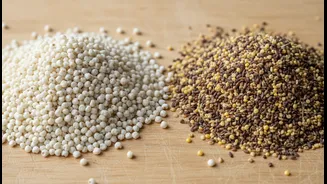
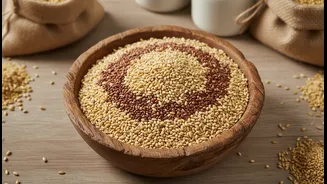
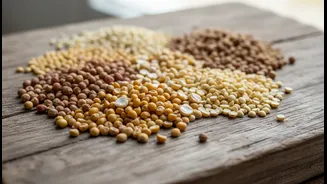
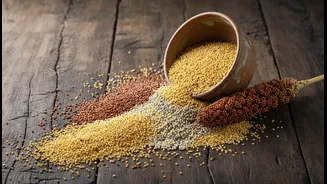
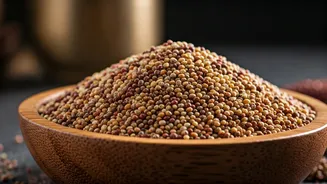
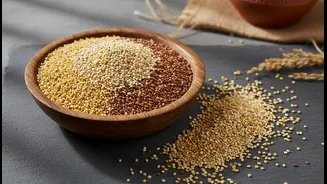
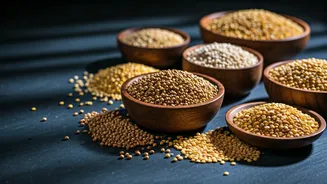
Choosing unpolished millets is the single most important decision a smart buyer can make. Polished millets are essentially stripped of their 'superfood' qualities, leaving behind mostly starch. So how do you tell them apart? Unpolished millets have their natural, earthy colours—foxtail millet is yellowish, kodo millet is reddish-brown, and others can be greyish. They have a coarse, slightly rough texture and may look less uniform. Polished millets, by contrast, appear whiter, smoother, and shinier. The most reliable sign is the 'millet eye', a tiny black dot on each grain. This is where the germ was attached. If you can see this dot on most grains, you have an unpolished or semi-polished product. Polished grains lose this identifier completely.
A Guide to Popular Premium Millets
Different millets offer unique benefits. Including a variety in your diet is a great strategy. Foxtail Millet (Kangni/Thinai) is rich in protein and iron, with a low glycemic index (GI) that helps manage blood sugar. Kodo Millet (Varagu) is prized for its high fibre and antioxidant content, which supports digestion and nervous system health. Barnyard Millet (Samwa/Kuthiraivali) is one of the best for weight management due to its high fibre content and low calorie count. It also has one of the lowest GIs among millets, making it excellent for diabetics. Brown Top Millet (Korale) boasts the highest dietary fibre of all common millets, making it exceptional for gut health and feeling full for longer.
Reading Labels and FSSAI Standards
When shopping, look for clear labelling. Words like "unpolished," "whole grain," and "organic" are good indicators of quality. To ensure standardisation, the Food Safety and Standards Authority of India (FSSAI) has specified quality parameters for 15 types of millets, covering moisture content, extraneous matter, and grain defects. While these standards help ensure basic quality, they don't distinguish between polished and unpolished varieties. Therefore, the responsibility still falls on the consumer to look for brands that explicitly state their millets are unpolished. A certified organic label provides an extra layer of assurance about the farming practices used.
Smart Shopping and Storage
Premium unpolished millets are increasingly available beyond specialty health stores. You can find them on major online platforms and in the organic sections of larger supermarkets. When buying, check the packaging date, as unpolished millets have a shorter shelf life than their polished counterparts because the natural oils in the bran can go rancid over time. To maximize freshness and retain nutrients, store your millets in an airtight container in a cool, dark, and dry place. For longer-term storage, especially in humid climates, keeping them in the refrigerator is an excellent way to preserve their quality.