





Meet the Desert's Resilient Gem
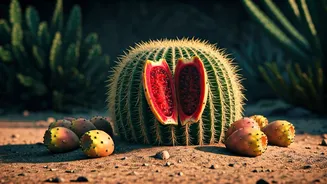
Known locally in regions like Rajasthan as 'naagphani', the prickly pear is the fruit of the Opuntia cactus. For centuries, it has thrived in arid conditions where few other plants can survive, a testament to its resilience. But this plant offers more
than just toughness; it provides two distinct edible parts: the vibrant, jewel-toned fruit (the pear or 'tuna') and the flat green pads (the 'nopales'). While the fruit is known for its subtly sweet, watermelon-like flavour, the pads offer a tart, vegetal taste often compared to green beans. Both are finding a new audience among health-conscious foodies and innovative chefs across India.
A Nutritional Powerhouse
Don't let its humble origins fool you; the prickly pear is packed with nutrients. A single cup of the raw fruit contains a significant amount of your daily fibre, magnesium, and Vitamin C needs, all for around 60 calories. It’s particularly rich in dietary fibre, which is crucial for healthy digestion. The plant is also a source of powerful antioxidants, including polyphenols, flavonoids, and a unique class of pigments called betalains, which are responsible for the fruit's brilliant red-magenta hue. These compounds are key to the plant's health-promoting properties.
Harnessing the Health Benefits
The traditional use of prickly pear in medicine is now being explored by modern science. Its high antioxidant and anti-inflammatory properties are thought to protect the body's cells from damage. Studies suggest it may help regulate blood sugar levels, making it a topic of interest for managing type 2 diabetes. The combination of fibre and pectin can help lower LDL ('bad') cholesterol, which is beneficial for cardiovascular health. Furthermore, the plant is a source of essential minerals like potassium and calcium, supporting everything from blood pressure regulation to bone health.
From Thorn to Table: A Practical Guide
The main challenge of the prickly pear is its spines, both the large ones and the fine, almost invisible ones called glochids. When buying from a market, choose brightly coloured, firm fruits. Many vendors will remove the spines for you. If preparing at home, always use thick gloves or tongs. The spines can be singed off over an open flame or carefully scraped away with a knife. To eat the fruit, slice off the top and bottom, make a shallow cut down the side, and peel back the thick skin to reveal the juicy flesh inside. The seeds are hard but edible. The cactus pads, or nopales, also need their spines removed before being sliced or diced. They can be boiled, grilled, or sautéed. Boiling them for about 10-15 minutes can help reduce their natural sliminess.
Bringing Prickly Pear to Your Kitchen
Once prepared, the prickly pear is incredibly versatile. The fruit's pulp can be blended into refreshing smoothies and juices, or simmered down to create vibrant jams, syrups, and sorbets. In India, it's being used to make tangy chutneys with ginger and spices that pair wonderfully with parathas. The cooked cactus pads (nopalitos) can be a fantastic addition to salads, omelettes, and stir-fries. A classic preparation is a simple salad with chopped nopalitos, tomatoes, onions, and coriander, dressed with a squeeze of lime. Whether you're aiming for a sweet treat or a savoury meal, this desert plant offers a new world of flavour.