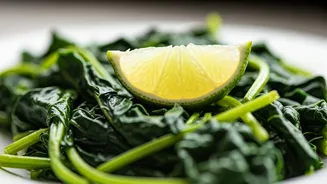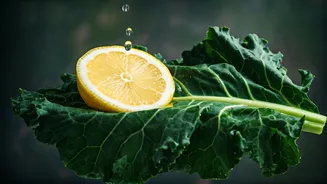







The Sad Saga of Dull Greens
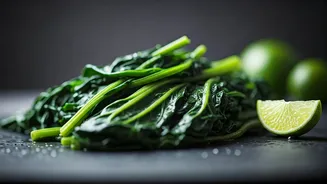
You start with beautiful, bright green leafy vegetables, full of promise. You plunge them into boiling water with the best intentions, only to find that within minutes, their colour fades to a discouraging olive or khaki. This disheartening transformation
isn't just a visual letdown; it often accompanies a mushy texture and a loss of that fresh, vegetal flavour. The culprit behind this colour change is a fascinating bit of kitchen chemistry involving the very thing that makes greens green in the first place: chlorophyll.
Understanding the Green
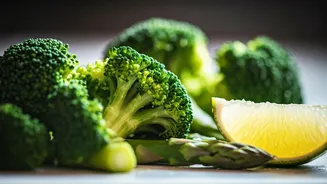
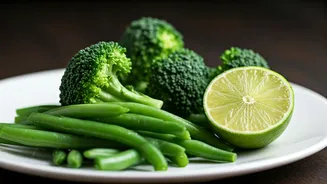
Chlorophyll is the pigment that allows plants to absorb energy from light. [4, 10, 11] In its raw state, this molecule is what gives spinach, kale, broccoli, and green beans their brilliant hue. When you cook green vegetables, two things happen. First, trapped gases between the plant's cells escape, which can initially make the colour appear even brighter and more vivid. [6, 9] However, heat and time also begin to break down the plant's cell walls. This releases natural acids that were once contained within the vegetable. [8, 11] This is where the problem begins.
The Acid Test: Does Lime Juice Work?
The headline suggests an acidic ingredient like lime juice is the hero we need. However, food science tells a different, more complex story. When chlorophyll is exposed to acids—including the vegetable's own, or added acids like lime juice or vinegar—a chemical reaction occurs. The magnesium atom at the center of the chlorophyll molecule is replaced by hydrogen atoms, creating a new compound called pheophytin. [1, 2, 7, 9] This new molecule is responsible for that dull, olive-green colour we're trying to avoid. [2, 7] So, adding lime juice to the boiling water is actually counterproductive; it will accelerate the colour loss, not prevent it. [1, 2]
The Real Secrets to Vibrant Greens
If acid is the enemy during cooking, what's the solution? First, cook your greens quickly. Chlorophyll degradation is a function of time and temperature; the less time your greens spend in hot water, the better. Aim for no more than five to seven minutes. [5, 11] Second, use a large volume of rapidly boiling, salted water. [3, 5] The large amount of water helps dilute the vegetable's natural acids as they're released, and cooking without a lid allows some of these volatile acids to escape with the steam. [5] Finally, the most crucial step for many greens is to prepare an ice bath. As soon as the vegetables are tender-crisp, remove them from the hot water and plunge them immediately into ice water. This is called 'shocking', and it instantly stops the cooking process, locking in that brilliant green colour. [3, 11, 13]
So, When Do We Use the Lime?
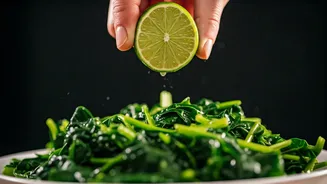
This doesn't mean you should banish lime juice from your greens. It has a vital role to play, just not in the boiling water. Once your greens are cooked and shocked, lime juice becomes your best friend. A squeeze of fresh lime juice or a drizzle of a lime-based vinaigrette added just before serving does several wonderful things. It adds a bright, zesty flavour that cuts through any bitterness, it provides a beautiful glossy finish, and the vitamin C in the lime juice can even help your body absorb more of the iron present in leafy greens like spinach. [15] The key is timing: acid is for finishing, not for boiling. [9, 14]