





Slashing the Cost of the Cosmos
The traditional model for space exploration was straightforward: NASA designed, built, and operated everything, a process that was incredibly thorough but also incredibly expensive. This government-led approach often involved cost-plus contracts, where
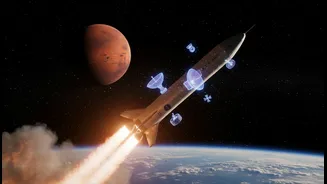
the final price tag could balloon. The new public-private model flips this on its head. Instead of buying a custom-built spacecraft, NASA is now buying services, much like a person might buy a plane ticket instead of building their own jet. By purchasing services like payload delivery on a fixed-price contract, NASA shifts the financial risk of development and delays to its commercial partners. This incentivizes companies like SpaceX and Relativity Space to innovate rapidly, drive down costs through competition and reusability, and build their hardware efficiently. The Commercial Crew Program, which ferries astronauts to the International Space Station, served as a powerful proof of concept, demonstrating that this model could save billions and free up NASA's resources for more ambitious deep-space goals.
Accelerating the Pace of Discovery
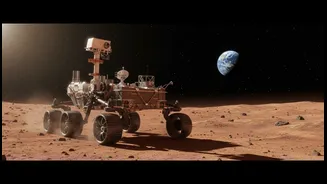
Scientific cadence refers to the frequency of missions and experiments—essentially, how often scientists get to conduct their research. Historically, flagship Mars missions have been years, sometimes decades, apart. The public-private model promises to dramatically increase this cadence. By lowering launch costs and creating a market for smaller, more frequent missions, the barrier to entry for scientific research plummets. NASA can now focus on developing high-value scientific instruments while commercial partners handle the transportation. A prime example is the recently announced Aeolus mission, where NASA provides the atmospheric science payload, and Relativity Space is responsible for the rocket, spacecraft, and flight operations. This approach allows for a more dynamic and iterative scientific process. Instead of placing all bets on a single, massive mission, NASA can deploy a portfolio of smaller, lower-cost missions that can provide a steady stream of data, test new technologies, and answer crucial questions faster, which is vital for planning future human landings.
Building a True Space Economy
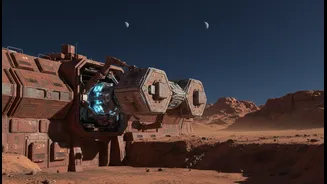
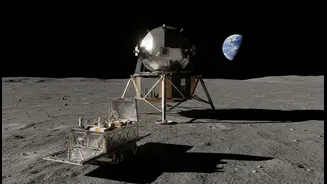
Perhaps the most profound impact of this model is its role in creating a self-sustaining commercial space economy. When NASA acts as a reliable anchor customer for services like Mars-bound payload delivery or communications, it provides companies with the stable demand needed to attract private investment and develop new capabilities. These companies are then free to sell those same services to other customers, including other nations' space agencies, research institutions, and eventually, other commercial ventures. This strategy was proven with commercial cargo and crew to low-Earth orbit and is now being extended to the Moon and Mars with programs like Commercial Lunar Payload Services (CLPS) and the new Commercial Mars Payload Services (CMPS). By stimulating a competitive marketplace, NASA is not just buying a ride to Mars; it is cultivating an entire industrial base capable of building, launching, and operating the infrastructure needed for a long-term human presence in space.
A New Blueprint for Exploration
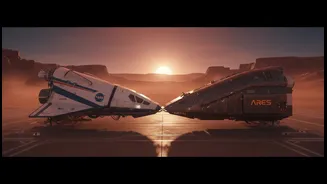
This strategic shift transforms NASA's role from being the sole operator of every mission to becoming an expert manager and visionary customer. The agency can focus its unparalleled scientific and engineering expertise on the grand challenges of deep-space exploration—like developing advanced life support and protecting astronauts from radiation—while leveraging the agility and cost-effectiveness of the private sector for established needs. The model isn't just about outsourcing; it's a symbiotic partnership where both sides learn and benefit. NASA gains access to innovative, lower-cost solutions, and commercial partners gain invaluable experience and the credibility that comes with executing a successful interplanetary mission. This collaborative blueprint is essential not only for getting humans to Mars but for creating a sustainable framework that will support exploration for decades to come.