







What Exactly is the Suneung?
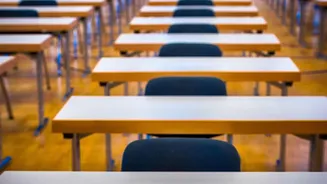
The Suneung, short for College Scholastic Ability Test (CSAT), is a gruelling, eight-hour exam marathon held annually on the third Thursday of November. For hundreds of thousands of high school seniors, this single day is the culmination of more than
a decade of intense study. The test covers multiple subjects including Korean, mathematics, English, Korean history, and various electives. Performance on the Suneung is the single most decisive factor for gaining admission into South Korea's top universities, which are seen as the gateway to a successful career and social standing. The pressure is so immense that a common saying suggests students can only get into a top 'SKY' university (Seoul National, Korea, and Yonsei) if they sleep no more than three hours a night.
A Nation on Pause
The headline isn't an exaggeration. On Suneung day, the Korea Exchange pushes the stock market's opening from 9 a.m. to 10 a.m. This isn't for financial reasons, but to help ease morning rush hour traffic, ensuring the nearly half a million students get to their testing centres on time without stress. Many government offices and private companies also delay their start times. The country's transportation system shifts gears, with Seoul's subway network adding extra services during the morning rush. Police are on standby, with motorcycles ready to provide emergency escorts for any student at risk of being late.
Silence in the Skies and Streets
Perhaps the most startling measure is the nationwide 'no-fly' zone. During the 35-minute English listening portion of the exam, all airport takeoffs and landings are suspended to eliminate any possible noise disturbance. Planes already in the air are required to maintain an altitude of at least three kilometres. On the ground, traffic is diverted from areas around the 1,300+ test centres, and drivers are asked not to honk their horns. Even military training exercises are rescheduled to maintain a peaceful environment for the test-takers. It's a level of nationwide coordination for an academic test that is unparalleled anywhere else in the world.
The Weight of 'Education Fever'
This massive national effort stems from a cultural phenomenon known as 'gyoyungyeol', or 'education fever'. For generations, academic success has been viewed as the most reliable path to social mobility and a secure life. The pressure on students is immense, with families investing heavily in private tutoring academies called 'hagwons', where students often study late into the night. The day itself is a spectacle of emotion. Younger students and parents gather at school gates, holding signs and chanting 'hwaiting!' (a cheer for 'you can do it!') to show support. Others gather at temples and churches to pray for good results.
New Pressures in 2026: The AI Threat
This year, the typical anxiety was compounded by a new threat: AI-assisted cheating. Following a recent scandal where a tax accountant exam's top scorer admitted to using a microcamera and AI, authorities implemented extraordinary security measures for the Suneung. Test proctors inspected students' eyeglasses for hidden cameras and even placed stickers over clothing buttons. In a more dramatic move, the government sent a nationwide emergency alert to all mobile phones just before the exam began, a tactic designed to trigger any devices students had failed to surrender, which caught dozens of violations.