


A Tale of Two Eclipses
In 2026, the cosmos has scheduled two noteworthy lunar eclipses for Earth's inhabitants. The first is a Total Lunar Eclipse on March 3, and the second is a deep Partial Lunar Eclipse on August 28. While both are significant astronomical events, their
visibility from India is vastly different. The March event will offer a unique viewing opportunity across the country, whereas the August eclipse will occur during daylight hours for India, rendering it invisible. This makes the March eclipse the one for Indian amateur astronomers to circle on their calendars and prepare for.
The Main Event: March 3rd Total Lunar Eclipse
The highlight for India is the total lunar eclipse on the evening of Tuesday, March 3, 2026. What makes this event special is its timing. For most of India, the Moon will rise while it is already partially or fully immersed in Earth's shadow. This creates the rare sight of an eclipsed moon appearing on the eastern horizon. While the full duration of the eclipse is over five hours, the key phases will happen around sunset and moonrise. The eclipse is technically a total one, meaning the entire Moon will pass through the darkest part of Earth's shadow, the umbra.
What You'll See Across India
Your viewing experience on March 3rd will depend heavily on your location. Observers in the extreme northeastern parts of India, such as Arunachal Pradesh and parts of Assam, along with the Andaman and Nicobar Islands, are in for the biggest treat. From these locations, it will be possible to witness the final few minutes of the total eclipse phase just after the Moon rises. The Moon will appear low on the horizon, glowing with a faint, reddish light. For the rest of the country, including major cities like Delhi, Mumbai, Bengaluru, and Chennai, the total phase will end just before the Moon crests the horizon. However, you will still see a partially eclipsed Moon rising, which is a stunning spectacle in itself. As the evening progresses, you can watch Earth's shadow gradually move away from the lunar surface until the Moon returns to its full, bright glory.
Understanding the Celestial Drama
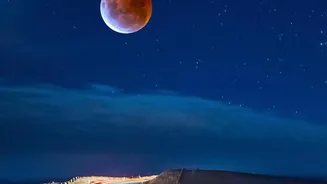
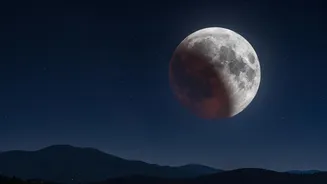
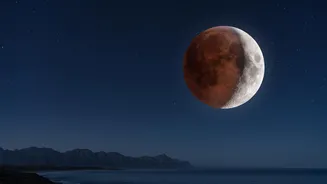
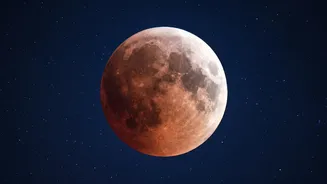
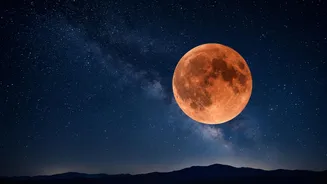
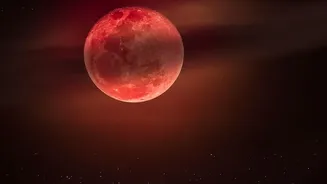
A lunar eclipse happens when the Earth positions itself directly between the Sun and the Moon, casting its shadow onto the lunar surface. This shadow has two parts: a faint outer shadow called the penumbra, and a dark inner shadow called the umbra. When the Moon passes entirely into the umbra, we see a total lunar eclipse. During this phase, the Moon often takes on a reddish or coppery hue, popularly known as a 'Blood Moon'. This colour is caused by sunlight filtering through Earth's atmosphere, which scatters blue light and allows red light to pass through and illuminate the Moon. For the March 3rd event, this is the colour skywatchers in the northeast might glimpse. For others, the 'bite' taken out of the moon will be the dark umbral shadow.
Your Guide to the Perfect Viewing
One of the best things about a lunar eclipse is that it's perfectly safe to view with the naked eye, unlike a solar eclipse. You don't need any special filters or glasses. To make the most of the March 3rd event, find a location with a clear, unobstructed view of the eastern horizon, as the main spectacle occurs as the Moon is rising. Getting away from bright city lights will enhance the experience, making the colours of the eclipsed moon more visible. While you don't need any equipment, a pair of binoculars or a small telescope will offer a magnificent close-up view, revealing details on the lunar surface as Earth's shadow creeps across it. Remember to check the exact moonrise time for your specific city closer to the date and get ready for a memorable evening.
A Note on the August Eclipse
Many may also hear about the deep partial lunar eclipse on August 28, 2026. While it will be a spectacular sight for observers in the Americas, Europe, and Africa, it will unfortunately be completely invisible from India. The entire event, from start to finish, occurs between approximately 7:00 AM and 12:30 PM Indian Standard Time. With the Sun high in the sky, the Moon will be below the horizon for the duration of the eclipse, so there will be nothing to see from the subcontinent. This makes the March 3rd opportunity all the more precious for Indian skywatchers.