






Understanding the 'Clean' Budget Concept
When we talk about a 'cleaner' budget, it isn't just about spending less; it's about spending smarter with transparency. It means understanding costs upfront, avoiding hidden fees, and getting genuine value. Japan, a country known for its price consistency,
is surprisingly well-suited for this approach. Unlike many destinations, the price of a snack or a subway ticket is often the same in a major tourist hub as it is in a quiet neighbourhood, which removes the stress of 'tourist pricing'. A clean budget focuses on predictable expenses, from affordable yet spotless accommodations to mastering the transport system without overspending.
Flights and Visas: The First Hurdles
Your flight will likely be the single biggest expense, with return tickets from major Indian cities ranging from ₹45,000 to ₹80,000. Booking two to three months in advance, especially during shoulder seasons like late autumn (November), can secure better prices. As for visas, Indian passport holders must apply in advance, as there is no visa-on-arrival. The good news is that the process is straightforward, and despite a recent global fee hike by Japan, the cost for Indian nationals remains low at ₹500, plus a service charge. An eVisa option is also available, streamlining part of the process.
Accommodation: Clean Comfort Without the Cost
Japan offers a wide array of clean, safe, and budget-friendly lodging options. Forget the idea that you're limited to expensive hotels. Business hotels, often located near train stations, provide compact, private rooms with amenities for ₹5,000 to ₹10,000 per night. Hostels and guesthouses are even more affordable, costing between ₹2,000 and ₹6,000 per person, and are known for their cleanliness. For a unique experience, capsule hotels offer privacy and a futuristic feel for around ₹3,000 to ₹5,000. These options provide excellent value and challenge the notion that staying in Japan has to be costly.
Transport: To JR Pass or Not to JR Pass?
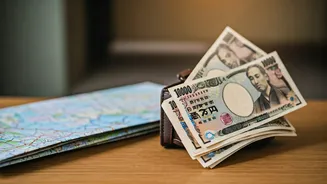
The Japan Rail (JR) Pass was once an automatic purchase for tourists. However, following a significant price increase in late 2023, its value is no longer guaranteed. A 7-day pass now costs around ¥50,000 (approx. ₹27,500). For a standard Tokyo-Kyoto-Osaka trip, buying individual bullet train (Shinkansen) tickets is often cheaper. For instance, a one-way ticket from Tokyo to Kyoto costs around ¥14,000. The JR Pass only becomes cost-effective if you're planning extensive long-distance travel, like adding a trip to Hiroshima. For city travel, rechargeable IC cards like Suica or Pasmo are essential for hopping on local trains and buses efficiently.
Eating Well on a surprisingly Small Budget
Food in Japan can be a culinary delight without draining your wallet. One of the best-kept secrets is the quality of food at convenience stores, or 'konbini,' like 7-Eleven, FamilyMart, and Lawson. You can find delicious onigiri (rice balls), sandwiches, bento boxes, and hot meals for a few hundred yen. A daily food budget can realistically be between ₹2,000 and ₹4,000, covering a mix of convenience store meals and experiences at local ramen shops or izakayas (Japanese pubs). Another fantastic option is the basement food halls of department stores ('depachika'), where you can find high-quality food, often at discounted prices before closing time.
Seeing the Sights for Less
Many of Japan's most beautiful experiences are free or have a low entry cost. Exploring vibrant neighbourhoods like Shibuya in Tokyo, strolling through public parks, and visiting many shrines and temples costs nothing. For instance, Tokyo's Senso-ji Temple and Kyoto's Fushimi Inari Shrine are free to enter. For panoramic city views, the Tokyo Metropolitan Government Building offers a free observation deck that rivals paid alternatives. By prioritising these attractions, you can immerse yourself in Japanese culture and beauty while keeping your activity budget minimal, allowing you to save for specific ticketed experiences you don't want to miss.