

The Tyranny of the Rocket Equation
Getting to Mars is difficult; getting back is exponentially harder. The single biggest constraint is the weight of supplies. Every kilogram launched from Earth costs thousands of dollars, and a return trip from Mars requires a tremendous amount of propellant.
To get a crew of four astronauts off the Martian surface, current estimates suggest they would need about 7 metric tons of rocket fuel and a staggering 25 metric tons of liquid oxygen to burn it. Launching all that oxygen from Earth is considered prohibitively expensive and logistically complex, costing billions of dollars. This massive hurdle has been a major barrier to planning a sustainable, long-term human presence on the Red Planet. For decades, scientists have theorized that the only realistic solution is to 'live off the land'.
Living Off the Land on Mars
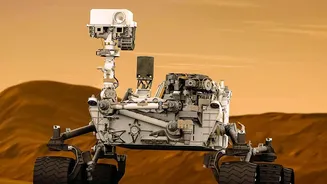
The concept of using local materials on another planet is called In-Situ Resource Utilization (ISRU). On Mars, the most abundant resource is carbon dioxide; its atmosphere is composed of about 96% CO2. For years, scientists have been working on technologies to convert this atmospheric CO2 into breathable oxygen. The leading method is solid oxide electrolysis, a process that uses electricity to split carbon dioxide molecules (CO2) into pure oxygen (O2) and carbon monoxide (CO). NASA took a critical first step with the MOXIE experiment aboard the Perseverance rover. MOXIE, a small, toaster-sized device, successfully and repeatedly produced small amounts of oxygen from the Martian atmosphere, proving the principle was sound. However, MOXIE was just a prototype, producing only 10-12 grams of oxygen per hour at its peak.
From Lab Bench to Full Scale
The headline-making breakthrough is the successful scaling up of this technology. While MOXIE proved it was possible, recent research has focused on designing a full-scale system capable of meeting the demands of a human mission. Scientists have now modeled a robust, scaled-up electrolysis system designed to produce an average of 3 kilograms of oxygen per hour. Operating continuously over the 14 months before astronauts arrive, this scaled-up reactor could generate the 30 metric tons of oxygen needed for the Mars Ascent Vehicle. This represents a monumental leap from MOXIE's small-scale demonstrations. Rather than a small experimental box, this involves a complete plant with compressors, heat exchangers, and multiple electrolysis cell stacks working in concert, designed to operate reliably in the harsh, changing Martian environment.
More Than Just Breathable Air
The benefits of large-scale CO2 electrolysis extend far beyond life support. While the oxygen produced is vital for breathing, the vast majority is destined to be used as rocket propellant oxidizer. Furthermore, the process is a linchpin for creating fuel itself. By combining the oxygen with hydrogen (which could be brought from Earth or extracted from water ice on Mars), astronauts can use processes like the Sabatier reaction to create methane (CH4) on-site. Methane is a potent rocket fuel. This ability to manufacture both fuel and oxidizer on Mars completely changes the mission architecture, dramatically reducing the mass that needs to be launched from Earth and making a return journey truly feasible. The process also generates carbon monoxide, which could potentially be used in other industrial processes or as a lower-grade fuel.
The Road Ahead to the Red Planet
While scaling up the CO2 reactor is a giant leap, it doesn't solve every challenge of a Mars mission. Significant hurdles remain, including protecting astronauts from cosmic radiation, dealing with the physiological effects of reduced gravity, and ensuring the long-term reliability of all systems. The next steps for ISRU involve building and testing these full-scale reactors on Earth under simulated Martian conditions to ensure they can withstand the planet's extreme temperature swings and pervasive dust. But solving the oxygen and propellant problem is arguably the most significant step toward making a crewed Mars mission sustainable. It shifts the paradigm from a temporary visit to the potential for a permanent, self-sufficient outpost.