



The Shock Announcement
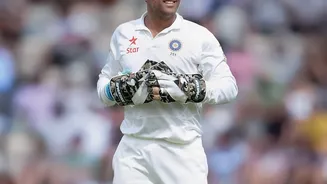
The decision came via a social media post on January 15, 2022, just one day after India lost a hard-fought Test series 2-1 to South Africa. In his statement, Kohli thanked the BCCI and his mentor MS Dhoni, under whom he took the reins in 2014. He stated
he had done the job with "absolute honesty" and had "left nothing out there." The timing, coming so soon after a series defeat, was abrupt, but the reasons behind it had been building for months, involving a mix of on-field pressures, off-field politics, and immense personal burnout.
A Cascade of Captaincy Changes
The Test resignation was not an isolated event but the final act in a confusing leadership saga. A few months prior, in late 2021, Kohli announced he would step down as the T20I captain after the World Cup to manage his workload. Shortly after, the BCCI removed him as the ODI captain as well, appointing Rohit Sharma as the sole white-ball leader. The board's reasoning was that it did not want split captaincy in the two limited-overs formats. This move, however, became a major point of public contention and soured the relationship between the star player and the board.
The Public Spat with the Board
The captaincy transition was far from smooth. Then-BCCI President Sourav Ganguly claimed he had personally requested Kohli not to step down from the T20I captaincy. However, Kohli publicly contradicted this in a press conference, stating that his decision was well-received and that he was never asked to reconsider. He also revealed he was informed of his removal as ODI captain just 90 minutes before the selection meeting. This public disagreement exposed a significant communication breakdown and a clear rift between India's most powerful player and its cricket board, which undoubtedly contributed to the growing strain.
The Weight of a 'Gruesome' Burden
In years since, Kohli has been candid about the sheer exhaustion that led to his decision. In May 2026, he described the dual responsibility of being the team's main batting pillar and its leader as a "gruesome" load that left him "completely spent." He explained that his drive to keep Indian cricket at the top made him ignore the personal toll until there was "nothing left in the tank." The pressure was relentless; if the team won but he didn't score runs, his form was questioned, and if he scored runs but the team lost, the result was questioned. This constant juggling act, combined with a dip in his own prolific run-scoring, made the burden unsustainable.
A Legacy Beyond the Exit
Despite the controversial exit, Kohli's tenure as Test captain remains a golden era for Indian cricket. He led India in 68 Tests, winning 40, making him the nation's most successful captain in the format. More than the numbers, he instilled a fearless, aggressive mindset, particularly in overseas conditions. Under his leadership, India achieved a historic first-ever series win in Australia in 2018-19 and held the ICC Test Mace for five consecutive years. He cultivated a world-class fast-bowling attack that could win matches anywhere in the world, fundamentally changing the identity of the Indian Test team.