

What Exactly Is Space Weather?
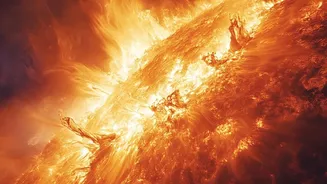
Think of space weather as the cosmic equivalent of terrestrial weather, but instead of wind and rain, it involves a stream of charged particles and radiation from the sun. This includes the constant flow of the 'solar wind' and much more dramatic events
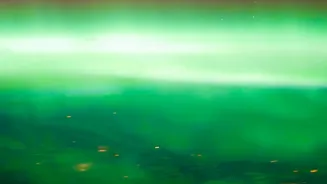
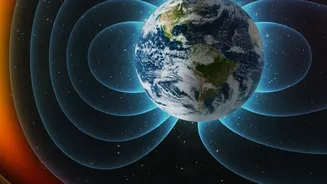
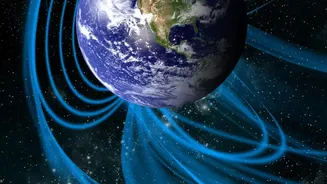
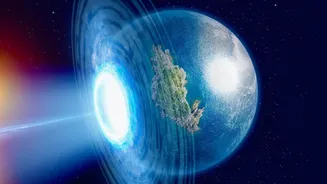
like solar flares and coronal mass ejections (CMEs). A solar flare is an intense burst of radiation, while a CME is a massive eruption of plasma and magnetic fields from the sun's outer atmosphere, the corona. When these events are directed towards Earth, they interact with our planet's magnetic field and upper atmosphere, triggering geomagnetic storms that can wreak havoc on technology.
The Silent Threat to Satellites
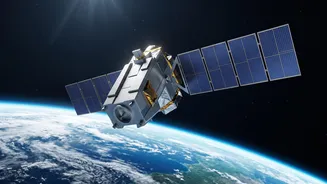
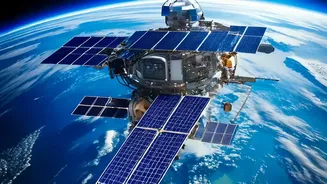
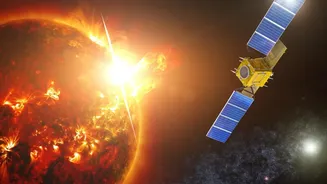
Satellites orbiting outside Earth's protective atmosphere are on the front lines of space weather. High-energy particles from the sun can damage sensitive electronics, causing malfunctions, phantom commands, or even complete failure. Furthermore, intense solar storms heat and expand Earth's upper atmosphere. This increases the atmospheric drag on satellites in low-Earth orbit, causing them to slow down and lose altitude. Without course corrections, these satellites risk falling out of orbit or colliding with other objects. A dramatic example occurred in February 2022, when a geomagnetic storm led to the loss of dozens of newly launched Starlink satellites.
Rerouting Flights and Radio Blackouts
Aviation is surprisingly vulnerable to solar activity. Solar radiation storms can cause high-frequency radio blackouts, particularly over the polar regions where Earth's magnetic shielding is weakest. This is a serious issue for transpolar flights, which are common routes between continents. Without reliable communication with air traffic control, pilots may be forced to reroute to lower latitudes, leading to significant flight delays and increased fuel consumption. In very extreme events, the radiation levels at flight altitudes can increase, posing a potential health concern for crew and passengers and forcing flight plans to be altered for safety.
When Your GPS Gets Lost in Space
The Global Positioning System (GPS) relies on precise timing signals sent from satellites to receivers on the ground. These signals travel through the ionosphere, a layer of Earth's atmosphere. During a geomagnetic storm, this layer becomes disturbed and unstable, which can bend, delay, and scatter the GPS signals. Standard GPS systems have models to correct for a 'quiet' ionosphere, but these models fail during a storm. The result can be positioning errors that jump from a few metres to tens of metres, rendering the system unreliable for high-precision applications like farming, construction, and even the navigation apps on your phone.
Forecasting and India's Eye on the Sun
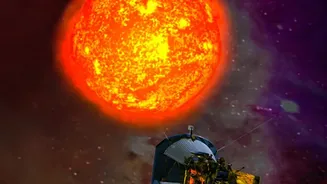
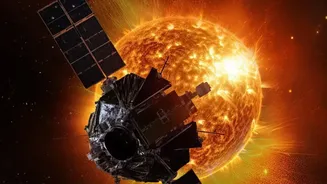
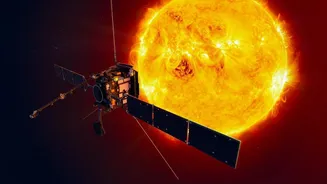
Like terrestrial weather, space weather cannot be stopped, but it can be predicted. Agencies around the world monitor the sun for signs of activity, issuing forecasts and alerts to help satellite operators, airlines, and power grid managers prepare for incoming storms. India has made a significant contribution to this global effort with its Aditya-L1 mission. Positioned 1.5 million kilometres from Earth, Aditya-L1 has an uninterrupted view of the sun, allowing its seven instruments to study solar phenomena and provide crucial data for understanding and forecasting space weather events in real-time. Recent studies using Aditya-L1 data have already provided new insights into how solar storms impact Earth's magnetic shield.