






The Allure of Levitation
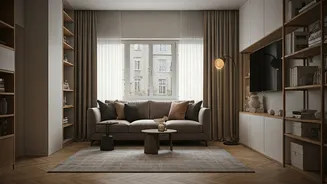
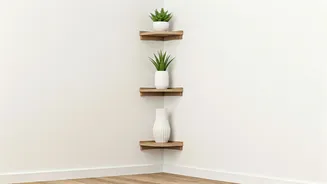
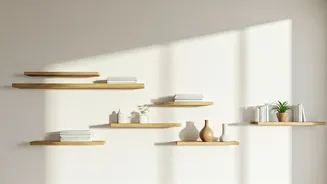
The primary appeal of floating shelves lies in their visual lightness. Unlike bulky bookcases or traditional bracketed shelves, their hidden supports create the illusion of more space, making rooms feel more open and airy. [7, 8, 10] This is a game-changer
in compact city apartments where every square foot matters. [11] By drawing storage vertically, they free up valuable floor area and reduce visual clutter, a core principle of minimalist living. [8, 10, 24] The clean, uninterrupted lines complement modern aesthetics perfectly, offering a storage solution that is both functional and stylishly unobtrusive. [9, 12]
Choosing the Right Wood
The material itself is key to the trend's success. Wood introduces a natural warmth that can prevent minimalist interiors from feeling cold or sterile. [8, 24] For a premium, modern look, walnut offers rich, dark tones and beautiful grain patterns. [2, 3] White oak is a durable, versatile, and moisture-resistant option, making it an excellent all-around choice, especially for kitchens. [4, 5, 6] Maple provides a lighter hue and a smooth, uniform grain that is perfect for contemporary spaces and resists scratches well. [2, 3] For a touch of classic elegance, cherry deepens in color over time, adding unique character. [3, 5] While more affordable, softwoods like pine are more prone to denting and may require thicker cuts for the same weight capacity. [2]
Installation and Placement
Proper installation is crucial for both safety and aesthetics. Floating shelves rely on hidden brackets that are mounted directly to the wall. [12] To ensure stability and prevent sagging, it is essential to secure the brackets into wall studs whenever possible. [9, 31] If studs are not available in the desired location, using appropriate drywall anchors is necessary to support the weight of the shelf and its contents. [31] Even for renters, installation is feasible, as the resulting screw holes are typically small and easy to patch upon moving out. [28] There are also tool-free, renter-friendly options that use adhesive and small pins, causing minimal wall damage. [25, 30]
The Art of the 'Shelfie'
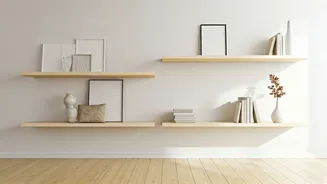
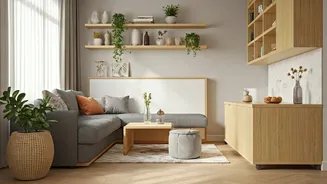
Styling is what turns a simple shelf into a design statement. A key principle is to embrace negative space; avoid the temptation to cover the entire surface. [14, 16] Designers often follow the "rule of three," grouping items in odd numbers to create a more dynamic and visually interesting arrangement. [13] Varying the height and texture of objects—mixing smooth ceramics with natural plants, books, and art—creates depth and contrast. [13, 15] A simple but effective technique is layering, placing taller items like a framed print in the back and shorter objects in the front. [13] This curated approach ensures the display feels intentional rather than cluttered.
Beyond the Living Room
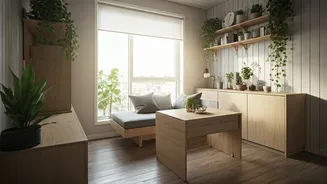
The versatility of floating shelves extends to every room in the home. In the kitchen, they open up the space by replacing heavy upper cabinets, making dishes and spices easily accessible. [7, 28] In a small bathroom, a shelf above the toilet provides crucial storage for towels and toiletries without taking up floor space. [12, 18] They can function as minimalist nightstands in a compact bedroom, freeing up room for a larger bed or better traffic flow. [18, 28] In an entryway, a single floating shelf can serve as a catch-all for keys and mail, creating a functional drop zone in even the narrowest of hallways. [18]