
The First Line of Defense: Detection
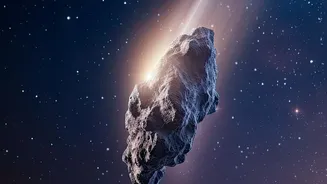
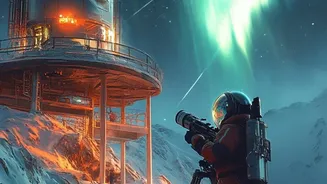
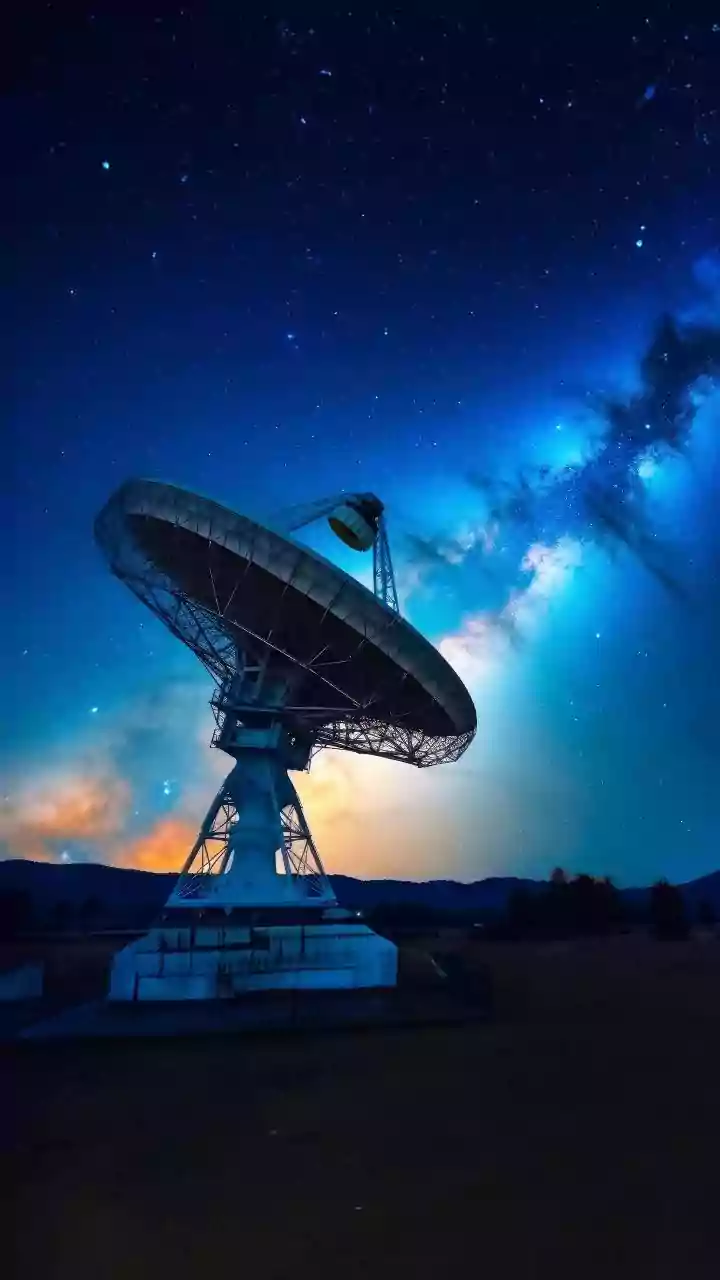
The investigation begins long before an object streaks through our sky. Specialised survey telescopes around the globe, like those in the Panoramic Survey Telescope and Rapid Response System (Pan-STARRS), constantly scan the darkness. These telescopes are
designed to spot faint, moving points of light against the backdrop of stationary stars. NASA's Planetary Defense Coordination Office (PDCO) oversees many of these efforts, with the goal of finding, tracking, and characterising near-Earth objects (NEOs) that could pose a potential hazard. These automated systems photograph the same patch of sky repeatedly, and software compares the images to identify anything that has moved or appeared. This systematic search is crucial for discovering asteroids and comets whose orbits might bring them close to Earth.
From Flash to Fireball: Atmospheric Entry
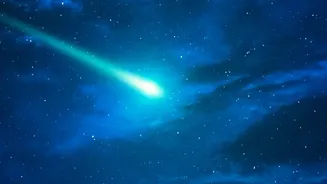
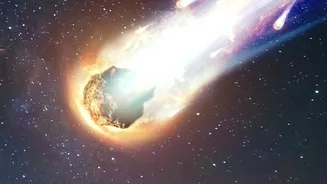
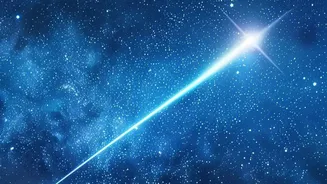
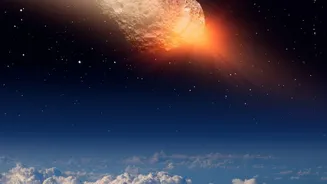
When a meteoroid, often no bigger than a grain of sand, hits our atmosphere at hypersonic speeds, it becomes a meteor. The immense friction with air molecules heats the object and the air around it, creating the bright streak of light we call a shooting star. For larger objects, this event is far more dramatic, producing a brilliant fireball. Networks of all-sky cameras, some operated by NASA, are set up to automatically record these bright events. By combining footage from multiple cameras, scientists can triangulate the meteor's path through the atmosphere, calculating its speed, trajectory, and how deeply it penetrated. This data is the first clue to determining if any part of it might have survived the fiery descent.
Reading the Rainbow: The Science of Spectroscopy
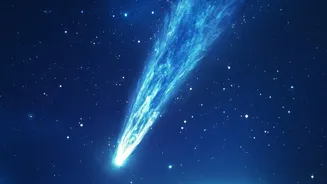
A fireball isn't just a pretty light; it’s a trove of chemical information. As the meteoroid burns up, it emits light that can be split into a spectrum, much like a prism creates a rainbow. This technique, called spectroscopy, allows astronomers to identify the chemical elements inside the object. Different elements, like iron, magnesium, and sodium, glow at specific, unique wavelengths when vaporised. By analysing these spectral 'fingerprints,' scientists can determine the meteoroid's basic composition. This helps them classify it into main types, such as stony, iron, or a mixture, providing vital clues about its origin in the solar system without ever touching the rock itself.
The Unseen Journey: Radar and Infrasound
The investigation doesn't end when the light goes out. After a meteor stops glowing, it enters a phase called 'dark flight', where it falls to the ground at terminal velocity. To track this, scientists turn to other senses. Weather radar networks, like the U.S. NEXRAD system, can detect falling meteorites. These radar systems are designed to spot raindrops and hail, but they're also sensitive enough to pick up a cluster of falling space rocks. Simultaneously, the hypersonic entry of a large meteor creates powerful, low-frequency sound waves called infrasound. Sensitive ground-based microbarographs can detect these waves, helping to pinpoint the location, energy, and even fragmentation of the event. Fusing data from optical cameras, radar, and infrasound gives a much more complete picture of the event from start to finish.
Recovery and Lab Analysis: The Final Pieces
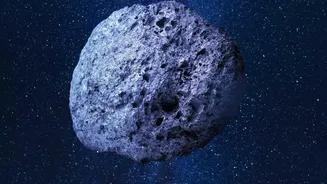
When radar and trajectory data suggest meteorites have reached the ground, the hunt begins. Scientists and dedicated meteorite hunters use the calculated 'fall ellipse' to narrow the search area. Finding these rocks quickly is vital, as earthly contamination from rain and soil can quickly alter their scientific value. Once recovered, the real analysis starts. In the lab, scientists use powerful tools like electron microscopes and mass spectrometers. Mass spectrometry, for instance, can measure the abundances of different isotopes (variants of an element) within the meteorite. These isotopic signatures are like a birth certificate, holding clues about the conditions in the early solar system, over 4.5 billion years ago, when the rock first formed.