







Why Your Watch is Your Best Safety Tool
The single most effective way to stay safe during the monsoon is to avoid being on the road during the worst conditions. This means planning your journey to sidestep heavy downpours. Recent alerts from the India Meteorological Department (IMD) for cities
like Mumbai highlight the chaos of intense rainfall, leading to flooded roads, severe traffic congestion, and disrupted services. Authorities often advise residents to avoid unnecessary travel during such periods. The first rains after a dry spell are notoriously dangerous, mixing with oil and dust on the road to create an exceptionally slick surface. Similarly, driving at night during the monsoon drastically reduces visibility, making it harder to spot potholes hidden by water or pedestrians. Whenever possible, plan your travel for daylight hours and wait for intense storms to pass before starting your journey.
Plan Your Journey Before You Turn the Key
Proactive planning is essential. Before any trip, check the weather forecast and any official advisories. The IMD's recent alerts for regions like Mumbai and Pune, warning of extreme showers and landslide risks in ghat sections, underscore the importance of staying informed. Use traffic apps to identify waterlogged areas and closed roads; many cities like Bhopal and Mumbai report severe road narrowing and hazards in metro construction zones after rain. If a road ahead is submerged, do not attempt to drive through it. It's impossible to gauge the depth or see hidden dangers like open manholes and large potholes. Even a foot of water can stall most cars, and two feet can sweep a vehicle away. Always have an alternative route in mind or be prepared to delay your trip.
Mastering the 'When' of On-Road Decisions
Once you are driving, timing continues to be critical. The biggest danger on wet roads is hydroplaning, where your tyres lose contact with the road and ride on a thin layer of water. This is most likely to happen at higher speeds. The most important preventative measure is to slow down significantly—by at least 5 to 10 mph from your normal dry-road speed. Avoid using cruise control, as it reduces your ability to react quickly. If you feel the car starting to hydroplane, your immediate reaction should be to ease off the accelerator and keep the steering wheel straight. Do not slam on the brakes, as this can cause the car to skid or spin. Maintain double the usual following distance from the vehicle in front, as braking distances are severely increased on wet surfaces.
Vehicle Preparedness: Ready for Any Window of Opportunity
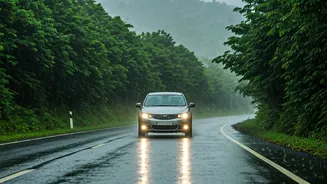
Smart timing is only effective if your vehicle is up to the task. A pre-monsoon check-up is non-negotiable. Your tyres are your first line of defence against hydroplaning; ensure they have adequate tread depth (a minimum of 3mm is recommended for wet Indian roads) and are properly inflated. Worn-out wiper blades are a major safety hazard, so replace them if they leave streaks or fail to clear water effectively. Your brakes must be in top condition, as wet roads can significantly reduce their efficiency. Finally, check all lights—headlights, taillights, and indicators—to ensure you can see and be seen in low visibility conditions. Using low-beam headlights during the day in heavy rain can also improve your visibility to other drivers.