

Mistake 1: Trusting the Claims on the Front
The front of the package is marketing, not nutrition science. Claims like “multigrain,” “made with real fruit,” or “natural” are designed to make you feel good about your purchase. A snack can be labelled “multigrain” even if the primary ingredient is refined
flour (maida), with only a small amount of whole grains added. Similarly, a “natural” label is poorly regulated and can be applied to products containing high-fructose corn syrup. Studies have shown that health claims on the front of a package do not reliably indicate how healthy the food actually is. The only way to know for sure is to ignore the front and turn the package over.
Mistake 2: Ignoring the Ingredient List
The ingredient list is the single most truthful part of any package. Ingredients are listed in descending order by weight, so the first three ingredients make up the bulk of the product. If you see sugar, refined flour (maida), or palm oil in the top three, the snack is likely not a healthy choice, no matter the claims on the front. A shorter, more recognisable ingredient list is often a sign of a less processed product. If the list contains many chemical names you can't pronounce, it’s a red flag.
Mistake 3: Overlooking Hidden Sugars
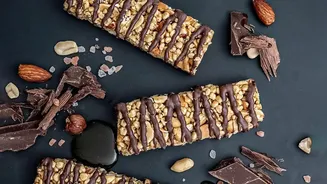
Sugar is the master of disguise. Food manufacturers often use multiple types of sugar so that “sugar” doesn't appear as the first ingredient. There are over 60 different names for sugar, including high-fructose corn syrup, dextrose, maltose, rice syrup, and fruit juice concentrate. Be wary of products marketed as “healthy” like granola bars, flavoured yogurts, and breakfast cereals, as they are often loaded with these hidden sugars. Even a product with “no added sugar” can still be high in natural sugars that your body processes in a similar way, like those in fruit juices.
Mistake 4: Misunderstanding Serving Sizes
This is a classic trap. You glance at the nutrition panel and see 150 calories and 5 grams of sugar, which seems reasonable. But then you look closer and realise the serving size is just 20g, and the packet you’re holding is 100g. This means if you eat the whole bag, which most people do, you’re consuming five times the amount on the label. Always check the serving size and the number of servings per container first. To get a true sense of the nutritional content, it's often better to look at the 'per 100g' column, which allows for a more direct comparison between different products.
Mistake 5: Falling for the 'Low-Fat' Myth
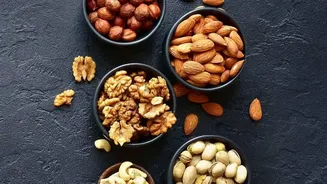
When manufacturers remove fat from a product, they have to replace it with something to maintain taste and texture. That something is often sugar, salt, or artificial thickeners. As a result, a “low-fat” or “fat-free” snack can sometimes have more calories and sugar than its full-fat counterpart. Furthermore, the term “fat-free” can be used on any product with less than 0.5 grams of fat per serving, which can add up if you eat multiple servings. Instead of avoiding fat altogether, focus on the quality of the fat. Look for snacks with healthy fats from nuts and seeds, and avoid those with hydrogenated or partially hydrogenated oils, which are sources of unhealthy trans fats.