
The Day a Nation Holds Its Breath
On the third Thursday of every November, an unusual quiet descends upon South Korea. For 35 minutes in the early afternoon, from 1:05 PM to 1:40 PM, the skies fall silent. All aircraft takeoffs and landings across the country are forbidden. Planes already
in the air must maintain an altitude of at least 3 kilometres until the all-clear is given. Even military drills are suspended. This nationwide pause isn't for a national holiday or a royal visit. It’s for the English listening portion of the College Scholastic Ability Test, or CSAT, known colloquially as the 'Suneung'. The measure ensures that the rumble of a jet engine doesn't disrupt the concentration of the more than half a million students taking the exam, an eight-hour academic marathon that is arguably the most important day of their young lives.
What is the Suneung?
The Suneung is a gruelling, single-day standardized test that covers multiple subjects including Korean, mathematics, English, and Korean history. For many of the roughly 550,000 high school seniors and graduates who take it annually, the result heavily dictates which university they can attend. In a society where graduation from a top-tier 'SKY' university (Seoul National, Korea, and Yonsei) is seen as a direct path to a successful career and social standing, the stakes could not be higher. This intense focus has deep roots in Korean history, where civil service exams have been a cornerstone of social mobility for centuries. Today, the Suneung is seen as the modern, meritocratic successor—a single, transparent benchmark where everyone, in theory, has an equal shot at success.
More Than Just Grounded Planes
The 35-minute flight ban is just the most dramatic example of a nationwide effort to support the test-takers. On Suneung day, public offices, banks, and even the stock market open an hour later, at 10 AM, to clear the roads for students heading to their exam centres. Public transport is increased, with more subways and buses running during the morning rush. Police cars and motorcycles are on standby to give students running late an emergency escort to their test sites. Construction work near the 1,300-plus test centres is paused to minimise noise, and drivers are encouraged to avoid honking. It is a collective, nationwide ritual where the entire country rallies behind its youth, a spectacle that often fascinates international observers.
The Pressure and The Pushback
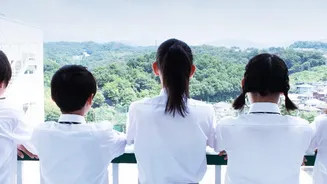
This incredible societal effort, however, comes at a human cost. The pressure to succeed in the Suneung is immense, contributing to significant stress, anxiety, and mental health challenges among students who spend years in intense preparation, often at expensive private academies called 'hagwons'. The day is the culmination of 12 years of formal education, with many feeling their entire future rests on this one performance. In recent years, this pressure has led to growing criticism and debate within South Korea about the fairness of the system and its psychological toll. Some students have even protested the system, arguing they don't want their lives to be 'graded' like a product. While the exam remains a cornerstone of the education system, there is a growing recognition of its downsides and a push toward more holistic university admission processes.
A New Threat: AI Cheating
This year, the traditional anxieties of the Suneung were compounded by a distinctly modern threat: AI-assisted cheating. Following scandals where individuals used devices like smart glasses and hidden cameras in other professional exams, authorities rolled out unprecedented security measures. Test-takers were required to place their glasses on their desks for inspection, and proctors distributed stickers to cover clothing buttons that could conceal a micro-camera. In a bold move, the government sent out nationwide emergency mobile alerts—which ring even on silent mode—to catch any students who hadn't surrendered their phones. These measures highlight the constant struggle to maintain the exam's integrity, which is paramount to its perceived fairness in society.