








The Unseen Toll of Time on Muscle
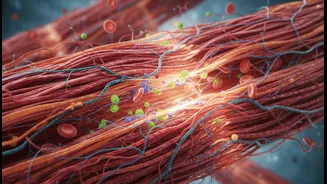
As we get older, our muscles naturally lose mass and strength in a process called sarcopenia. This isn't just about struggling to open a tight jar or climb stairs; it's a significant health issue that affects mobility, metabolic health, and our ability
to recover from illness or injury. For years, scientists understood that lifestyle factors played a role, but the precise molecular changes that drive this decline remained something of a mystery. Healthy muscles are crucial for regulating blood sugar and supporting our metabolism. The gradual weakening increases the risk of falls and fractures, impacting independence and quality of life for millions. This makes understanding and combating sarcopenia a critical goal in promoting healthy ageing.
A 'Molecular Switch' Called DEAF1
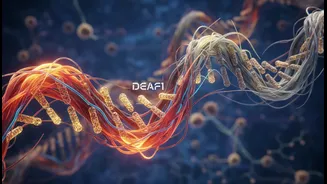
A breakthrough study from Duke-NUS Medical School has identified a key player in muscle ageing: a gene regulator known as DEAF1. Researchers discovered that as we age, the levels of DEAF1 in our muscles tend to increase. This is problematic because DEAF1 pushes a critical muscle growth pathway, known as mTORC1, into a state of chronic overactivity. While mTORC1 is essential for building and repairing muscle in our youth, its constant activation in older age disrupts the delicate balance between producing new proteins and clearing out damaged ones. This imbalance leads to an accumulation of cellular junk, stressing the muscle and accelerating its decline.
How Exercise Flips the Switch
Here's where it gets exciting. The research demonstrated that physical activity can directly counteract this age-related dysfunction. Exercise was found to lower the elevated levels of DEAF1 in ageing muscles. This action effectively 'resets' the overactive mTORC1 pathway, allowing the cells to resume their essential housekeeping duties—clearing out damaged proteins and restoring a healthier balance. According to the study's authors, this shows that exercise doesn't just manage the symptoms of ageing; it targets one of the underlying molecular causes. By flipping this switch, exercise helps older muscles regain their ability to repair themselves, stay strong, and become more resilient.
What Kind of Exercise Is Best?
While the recent DEAF1 study focused on the effects of endurance exercise in mice, a broader body of research suggests that a combination of exercise types is most beneficial for combating sarcopenia. Resistance training—like lifting weights, using resistance bands, or doing bodyweight exercises—is particularly effective at building muscle mass and strength, which directly counters the primary symptoms of sarcopenia. Aerobic exercise, such as brisk walking, running, or cycling, improves cardiovascular health and mitochondrial function, the cellular powerhouses that are also implicated in muscle ageing. Some research suggests that structured, goal-oriented exercise may have a stronger effect on biological ageing than general daily activity. The key takeaway is that regular, challenging physical activity of both resistance and aerobic forms provides a powerful strategy for maintaining muscle health.
Beyond Muscle: A Whole-Body Reset
The benefits of flipping this molecular switch aren't confined to your biceps. The process of reversing age-related molecular damage is linked to epigenetics—the study of how behaviours and environment can cause changes that affect the way your genes work. Research has shown that exercise can induce epigenetic changes that essentially make muscle tissue 'younger' from a biological standpoint. These benefits extend to other organs, with studies suggesting that physical fitness can also slow epigenetic ageing in the heart, liver, and other tissues. This paints a picture of exercise not as a simple calorie-burning activity, but as a powerful intervention that can profoundly influence how our bodies age at the most fundamental level. The findings open up new possibilities for therapies that could mimic the effects of exercise for those who are unable to be physically active.