

A Universe in Disagreement
For decades, astronomers have faced a perplexing problem known as the "Hubble Tension". It's a fundamental disagreement about the universe's expansion rate, called the Hubble constant. There are two main ways to measure this value. The first method looks
at the early universe by studying the afterglow of the Big Bang, known as the Cosmic Microwave Background (CMB). Observations from missions like the Planck satellite use this ancient light to predict how fast the universe should be expanding today, arriving at a value of around 67 kilometres per second per megaparsec. The second method measures objects in the nearby, or "late," universe, like pulsating stars called Cepheid variables and exploding stars called Type Ia supernovae. These act as 'standard candles' because their intrinsic brightness is known, allowing astronomers to calculate their distance and, in turn, the local expansion rate. This method consistently yields a faster rate, around 73 km/s/Mpc. This isn't a minor discrepancy; it suggests our standard model of cosmology might be missing something crucial.
Webb's Dust-Piercing Infrared Vision
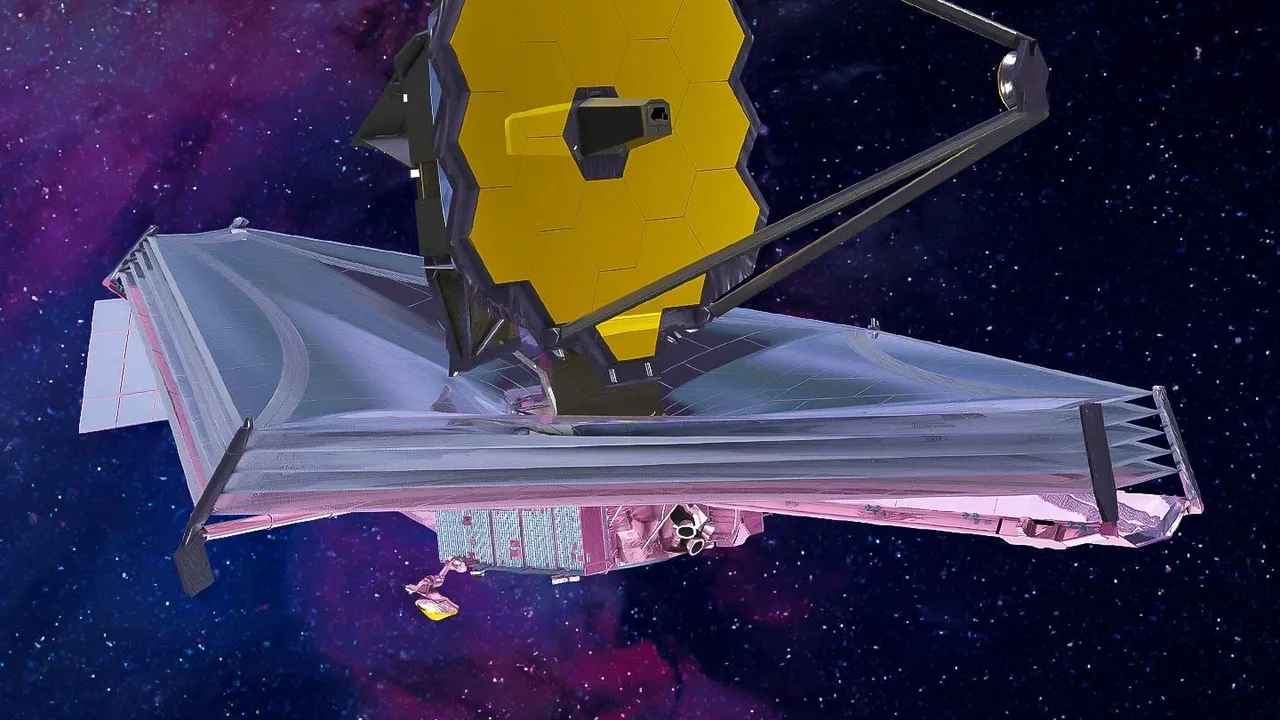
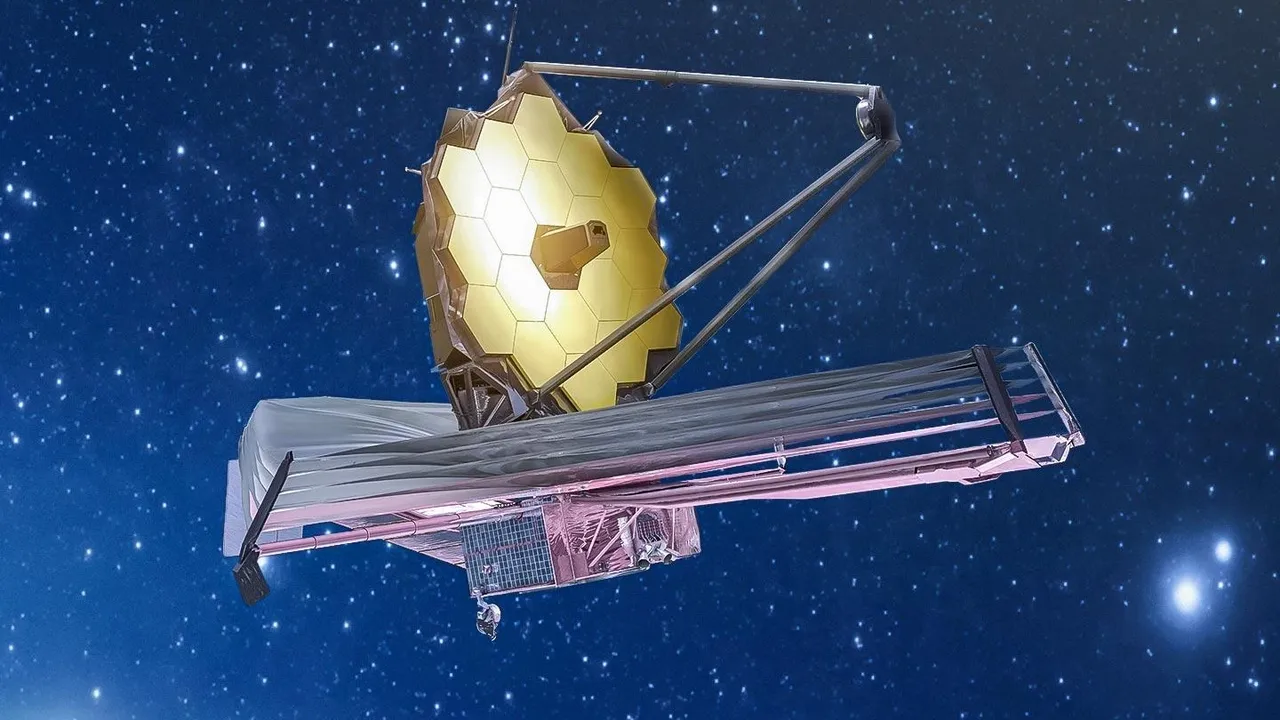
This is where the James Webb Space Telescope (JWST) changes the game. Its primary advantage is its ability to see the universe in infrared light, which has longer wavelengths than visible light. This unique capability is critical for two main reasons. Firstly, clouds of cosmic dust and gas can obscure or dim the visible light from distant stars, making them appear fainter and thus farther away than they actually are. This has always been a potential source of error in measurements from telescopes like Hubble. Infrared light, however, can pass through this dust much more easily, providing a clearer and more accurate view. Secondly, Webb's vision is significantly sharper than Hubble's at these infrared wavelengths. This allows it to more clearly separate individual Cepheid stars from their crowded stellar neighbourhoods, eliminating another major source of measurement uncertainty called 'blending'.
Confirming the Controversy, Not Closing It
Many in the scientific community hoped that Webb's superior precision would resolve the Hubble Tension, perhaps by revealing systematic errors in the previous Hubble data. The opposite has happened. Recent studies using JWST data to observe Cepheid variables have confirmed that Hubble's measurements were remarkably accurate all along. By slicing through the cosmic dust and isolating these vital standard candles with unprecedented clarity, Webb's observations have solidified the findings for the faster expansion rate in the local universe. Instead of closing the gap, Webb's infrared data has effectively eliminated measurement error as the likely culprit for the Hubble Tension. The discrepancy between the early and late universe measurements is real, and it's not going away.
What This Means for Physics
With measurement errors largely ruled out, scientists are now facing the thrilling and daunting possibility that our fundamental understanding of the universe, the Standard Model of Cosmology, is incomplete. The persistent tension suggests that there might be unknown physics at play. Some theories propose the existence of a new type of 'dark energy' in the early universe, or perhaps a novel, undiscovered particle that influences cosmic expansion. While Webb has not yet provided the final answer, its data is crucial for stress-testing these new theories. By providing a rock-solid, high-fidelity measurement of the local expansion rate, Webb gives theorists a precise target to aim for. The telescope’s ability to peer back in time and through cosmic dust provides the most reliable data points we've ever had.