





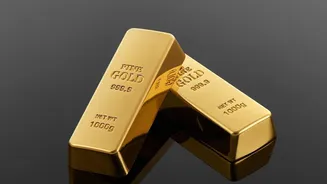

Physical Gold: The Timeless Tradition
This is the gold you can see and touch—jewellery, coins, and bars. Its biggest appeal is its tangibility and cultural significance, especially for milestones like weddings and festivals. When you hold physical gold, you have direct ownership without counterparty
risk. However, this tradition comes with costs. When buying jewellery, you pay 'making charges' that can range from 5% to over 20%, which are typically non-recoverable when you sell. All physical gold purchases also attract a 3% Goods and Services Tax (GST). Furthermore, ensuring its security involves locker fees, and verifying its purity can be a concern if you don't buy from a reputed, hallmarked seller. While there's no legal limit on how much gold you can own, you must be able to prove the source of funds used for its purchase.
Digital Gold: The Modern Convenience
Digital gold allows you to buy 24K gold online in small fractions, sometimes for as little as Re 1. Platforms like Augmont, MMTC-PAMP, and SafeGold facilitate these purchases, storing an equivalent amount of physical gold in insured vaults on your behalf. This method is incredibly convenient, has no storage costs for the initial few years, and guarantees 99.9% purity. However, it has two major drawbacks. First, like physical gold, every purchase includes a 3% GST. Second, and more importantly, digital gold is currently unregulated by SEBI or the RBI. This means the investor protection mechanisms that cover financial products like mutual funds are not available here, exposing you to platform and counterparty risks. Discussions about bringing it under a regulatory framework are ongoing, but no final rules have been announced.
Gold ETFs: The Market-Savvy Instrument
A Gold Exchange-Traded Fund (ETF) is a mutual fund that invests in physical gold and trades on the stock exchange, just like a share. Each unit of a Gold ETF is backed by physical gold of high purity, and its price tracks the domestic price of gold. The biggest advantages are that Gold ETFs are regulated by SEBI, highly liquid, and do not attract the 3% GST at the time of purchase. The costs involved are a small annual expense ratio (usually under 1%) and brokerage fees when you buy or sell. The main requirement is that you need a Demat and trading account to invest. While you can't convert ETF units into physical gold, they are an efficient way to get pure, price-linked exposure to gold as a financial asset.
Taxation: How Your Gains Are Treated
The tax you pay on profits depends on how long you hold the investment. For both physical and digital gold, if you sell within 24 months, the profit is a Short-Term Capital Gain (STCG) and is added to your income, taxed at your slab rate. If you hold for more than 24 months, the profit is a Long-Term Capital Gain (LTCG) taxed at a flat 12.5%. Gold ETFs have a tax advantage here. The holding period for LTCG is only 12 months, not 24. This makes them more tax-efficient for medium-term investments.
Which One Is Right for You?
There is no single best option; the right choice depends entirely on your financial goals. Choose Physical Gold if your primary goal is for personal use, such as for a wedding, as a gift, or as a family heirloom. Its emotional and cultural value is unmatched, but it is the least efficient as a pure investment due to high initial costs. Choose Digital Gold for convenience and starting small. If you want to save in gold with small, regular amounts without opening a Demat account, this is a great entry point. However, be mindful of its unregulated status and consider it for smaller allocations. Choose Gold ETFs if your goal is long-term wealth creation and portfolio diversification. For a serious investor who wants regulated, low-cost, and liquid exposure to gold prices, ETFs are generally the most efficient financial instrument.