







The New Overnight Contender Arrives
Indian Railways is set to launch the nation's second Vande Bharat sleeper service, the Sant Ravidas Express, on July 17. This new train will connect Varanasi in Uttar Pradesh with Chheharta, near Amritsar, in Punjab, creating a significant new overnight
link between the two states. The train is designed for comfort and speed, boasting modern amenities, ergonomically designed berths, and a self-propelled system that allows for faster acceleration and deceleration. Like its predecessors, it features multiple classes—First AC, Second AC, and Third AC—to cater to different budgets, accommodating over 800 passengers. The launch marks another step in the ambitious plan to modernize long-distance train travel in India.
Why A Direct Comparison Is Crucial
While the Vande Bharat sleeper is marketed as a premium, high-speed alternative, the headline features don't tell the whole story for every passenger. The 'best' train choice is a personal calculation based on three key factors: cost, timing, and comfort. A train that saves three hours might be a game-changer for a business traveler but an unnecessary expense for a family on a budget. Similarly, departure and arrival times can make or break an itinerary. The new train will operate three days a week, which might not align with everyone's travel plans. This is why simply knowing a new train exists is not enough; a route-level comparison against established services like the Rajdhani or other superfast expresses is vital to make an informed decision that suits your specific needs.
The Fare Breakdown: A Rupee-For-Rupee Look
The Vande Bharat sleeper is positioned as a premium service, and its fares reflect that. Reports confirm that ticket prices are marginally higher than those for Rajdhani Express trains, which have long been the benchmark for premium overnight travel. For instance, on a 1,000 km journey, a Third AC ticket might cost around Rs 2,400, compared to a slightly lower fare on a comparable Rajdhani route. It's also important to note a key policy change: Vande Bharat sleepers will only issue confirmed tickets, completely eliminating the Reservation Against Cancellation (RAC) system. While this guarantees a berth, it also removes the flexibility that RAC provides. Furthermore, there's a minimum chargeable distance of 400 km, meaning short trips on this train could be disproportionately expensive.
Racing The Clock: Schedules and Timings Matter
On paper, the Vande Bharat sleeper is a clear winner on speed, capable of running at 180 km/h, although operational speeds are typically capped around 130 km/h for safety. The new Varanasi-Chheharta service, for example, will cover its journey in approximately 22 hours for the 14623 train and 21 hours for the 14624. The departure from Varanasi is at 7:05 PM, arriving in Chheharta the next day at 5:10 PM. The reverse journey departs Chheharta at 2:05 PM, reaching Varanasi the next day at 12:15 PM. Potential passengers must compare these timings with existing trains on the corridor. An evening departure might be perfect for those looking to save a hotel night, but a late afternoon arrival might be inconvenient. The tri-weekly schedule also requires careful planning.
Beyond Price: The Onboard Experience
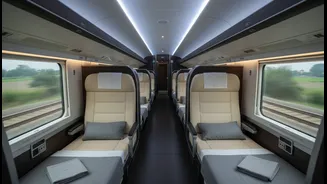
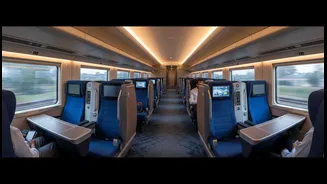
This is where the Vande Bharat sleeper truly aims to stand out. The coaches offer improved soundproofing, wider and better-cushioned berths, sensor-based taps, bio-vacuum toilets, and automatic doors. First AC passengers even get access to hot showers, a feature unheard of on most Indian trains. The train is equipped with the indigenous Kavach anti-collision system for enhanced safety. Compared to the familiar interiors of Rajdhani or Duronto trains, the Vande Bharat offers a more modern, hotel-like environment, from the lighting to the modular pantries. For travelers who prioritize a quiet, clean, and comfortable journey, these upgrades might well be worth the slightly higher fare, even if the time saved is minimal.