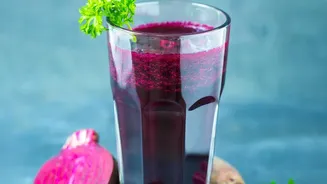







The Power of the Humble Beetroot
For years, athletes have sworn by beetroot juice for its performance-enhancing abilities. This isn't just a health fad; it's a strategy backed by a growing body of scientific research. The magic lies in a naturally occurring compound called inorganic
nitrate. While nitrates are also found in leafy green vegetables like spinach and arugula, beetroot is one of the richest and most bioavailable sources, meaning your body can easily absorb and use what it contains. This has made it a go-to supplement for runners, cyclists, and team sport athletes looking to gain a small but significant advantage. The focus is on how this simple vegetable can fundamentally change how your body performs under stress.
From Nitrate to Nitric Oxide
The performance benefits of beetroot don't come directly from the nitrate itself, but from what it becomes inside your body. The process is a fascinating biological journey. After you consume nitrate-rich foods like beetroot, bacteria in your mouth convert the nitrate (NO3−) into nitrite (NO2−). This nitrite is then absorbed into your bloodstream. Under conditions of low oxygen, such as during intense exercise, your body can further convert this nitrite into nitric oxide (NO). Nitric oxide is a potent vasodilator, meaning it relaxes and widens your blood vessels. This is the critical step that unlocks the athletic benefits. It’s a clever natural pathway that your body uses to respond to increased physical demands.
Boosting Oxygen to Sprinting Muscles
During heavy sprinting, your muscles are working incredibly hard and demanding a massive amount of oxygen. This is where nitric oxide becomes a game-changer. By widening the blood vessels, nitric oxide increases blood flow to the working muscles. More blood flow means more oxygen can be delivered precisely where it's needed most. Studies have shown that nitrate supplementation can limit the decrease in muscle oxygen saturation during repeated sprints. This improved oxygenation makes your muscles more efficient. Essentially, they can perform the same amount of work with less energy, reducing the oxygen cost of exercise. This allows athletes to maintain a higher power output and resist fatigue for longer during short, intense bursts of effort.
What 'Micro-Dosing' Means Here
The term 'micro-dosing' in this context doesn't refer to the psychedelic practice. Instead, it’s about the strategy of supplementation. Research indicates that both acute (single-dose) and chronic (multi-day) supplementation can be effective. An acute dose, typically taken 2-3 hours before exercise, is designed to peak plasma nitrite levels right when you need them for a competition or a hard workout. Chronic loading involves taking a daily dose for several days leading up to a major event. This strategy can enhance your baseline nitric oxide levels, potentially adding a small extra performance gain on top of the acute dose. The idea is to consistently supply your body with the building blocks it needs to optimize nitric oxide production, rather than just taking a large, one-off dose.
Putting It Into Practice
If you're looking to try this for yourself, the science offers clear guidelines. The effective dose for performance benefits is generally between 300-500 mg of nitrate. This translates to about 500ml of commercial beetroot juice or one to two concentrated 70ml shots. Timing is crucial: you should consume your beetroot juice 2-3 hours before you start your workout or race to allow your body time to complete the conversion to nitric oxide. For a key race, some athletes adopt a loading protocol, taking a dose daily for 4-6 days beforehand. It’s also wise to test your tolerance during a training session before relying on it for a big event, as some people can experience gastrointestinal discomfort. And a crucial tip: avoid using antibacterial mouthwash, as it can kill the helpful bacteria in your mouth responsible for the first step of the nitrate-to-nitrite conversion.