

In the world of yoga, some of the most profound poses are the simplest. Apanasana, often called the Knees-to-Chest Pose, is a gentle but powerful posture that offers significant relief for common issues like back pain, bloating, and stress.
What is Apanasana?
Apanasana is
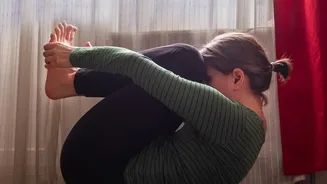
a foundational supine yoga posture where you lie on your back and hug your knees towards your chest. Its common name, the Wind-Relieving Pose, hints at one of its primary benefits: aiding digestion and relieving gas. The Sanskrit name breaks down into 'Apana', which means 'downward-moving life force', and 'Asana', meaning 'pose'. Therefore, the pose is designed to encourage a downward flow of energy, which in yogic philosophy, governs elimination and release.
The Physical Benefits of Knees-to-Chest
The gentle compression and stretching involved in Apanasana offer a wealth of physical rewards. One of its most celebrated benefits is the relief of lower back pain. By gently stretching the lumbar spine and releasing tight muscles, it can decompress the back after long periods of sitting or standing. The pose also massages the abdominal organs, which can stimulate digestion, ease constipation, and reduce bloating. Furthermore, it provides a good stretch for the hips and glutes, improves spinal flexibility, and can help alleviate menstrual discomfort.
The Energetic Purpose: Balancing Apana Vayu
Beyond the physical, Apanasana works on a subtle, energetic level. In yogic tradition, the body has five primary energy currents called 'vayus'. Apana Vayu is the current that flows downward and outward, governing all forms of elimination—from physical waste to negative thoughts. When Apana Vayu is balanced, we feel grounded, secure, and able to let go of what no longer serves us. An imbalance can lead to issues like constipation, anxiety, and insecurity. Apanasana directly supports the function of Apana Vayu, helping to clear blockages and restore a healthy energetic flow, which promotes mental calmness and stability.
How to Practice Apanasana Correctly
Proper alignment is key to reaping the benefits of Apanasana safely. Follow these steps:
1. Lie flat on your back with your legs extended.
2. As you exhale, gently bend your knees and draw them towards your chest.
3. Clasp your hands around your shins, just below the knees. If this is difficult, you can hold the backs of your thighs instead.
4. Keep your back flat on the mat, ensuring your sacrum (the bony plate at the base of your spine) stays grounded. Avoid lifting your hips.
5. Relax your shoulders away from your ears and broaden your collarbones. Tuck your chin slightly to keep your neck long.
6. Hold the pose for 30 seconds to a minute, breathing deeply and smoothly.
7. For a gentle massage, you can rock slowly from side to side.
8. To release, exhale and slowly extend your legs back down to the floor.
Modifications and Important Precautions
Apanasana is accessible to most, but some considerations are important. If you have a larger chest or stomach, it can be helpful to take your knees slightly wider, towards your armpits, to create more space. For those with significant back pain or tightness, practicing with one leg at a time (Ardha Apanasana) is a great modification.
However, this pose should be avoided or practiced with caution by individuals with recent abdominal or spinal surgery, active hernias, or significant knee injuries. Pregnant women should avoid the full expression of the pose after the first trimester and should consult with an instructor for safe alternatives.