



A top AI boss says we could cure cancer and other major diseases in under a decade. It's a huge claim from Anthropic CEO Dario Amodei, sparking hope and skepticism. Is this the dawn of a medical revolution or just technological optimism? Let's unpack
it.
The Ten-Year Promise
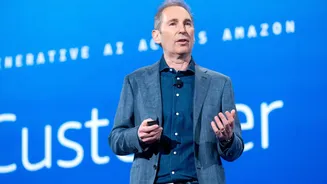
In a video that quickly captured headlines, Anthropic CEO Dario Amodei made a stunning prediction: diseases like cancer, Alzheimer's, and heart disease could become 'relics of the past' in less than a decade, thanks to AI. Coming from the head of a leading AI company, the statement represents a bold vision where artificial intelligence doesn't just assist scientists but fundamentally accelerates the pace of discovery. Amodei, along with other tech leaders, believes AI can compress decades of biological research into a fraction of the time, leading to an 'age of miracles'. Anthropic is already partnering with biotech firms to use its AI, Claude, to speed up the development of potential treatments for cancer and other conditions.
AI in the Lab Today
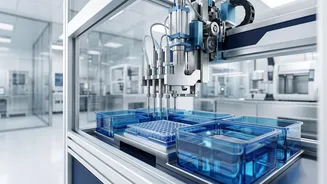
Beyond the headlines, AI is already making a tangible impact in oncology. Its greatest strength lies in processing colossal amounts of data far beyond human capacity. In drug discovery, AI models can screen millions of potential drug compounds to find promising candidates, a process that traditionally takes years and enormous investment. For example, Google DeepMind's AlphaFold has predicted the structures of over 200 million proteins, a breakthrough that helps scientists understand diseases better. In diagnostics, AI is helping radiologists spot cancer on scans with greater accuracy and flagging patterns the human eye might miss. It is also being used to match patients to clinical trials more effectively and to personalize treatments based on a tumor's unique genetic makeup.
A Reality Check from Doctors
While the potential is enormous, many in the medical community urge caution. Oncologists and researchers are quick to point out that cancer is not one disease, but hundreds of complex, constantly evolving diseases. A breakthrough against one type of cancer may not apply to others. Medical experts argue that while AI is a powerful tool, it cannot replace the years of rigorous laboratory research, animal testing, and human clinical trials required to prove a drug is safe and effective. As one medical oncologist noted, AI can generate a million hypotheses, but humans are still needed to figure out which ones are true. Some critics dismissed the ten-year timeline as 'impossible' and 'insane', suggesting it was hype intended to generate excitement ahead of a potential IPO.
The Long Road Ahead
The path from an AI-discovered molecule to a widely available cure is filled with obstacles. One of the biggest hurdles is data. AI models need vast quantities of high-quality, unbiased medical data to learn, and this information is often private and siloed within different hospitals and companies. There are also significant regulatory hurdles. Any new treatment must go through stringent reviews by bodies like the Food and Drug Administration (FDA). Furthermore, many AI systems operate as 'black boxes', meaning even their creators don't fully understand how they arrive at a conclusion. This makes it difficult for doctors to trust and act on their recommendations without clear, explainable reasoning. For now, the consensus in the medical field is that AI is an invaluable 'copilot' for doctors, but not a replacement for human judgment.