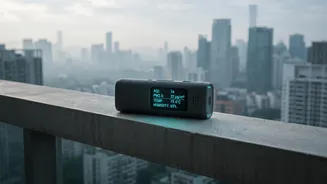







Winter in India brings relief from the heat but also a serious health challenge: air pollution. For those who love running or playing sports outdoors, it's crucial to balance fitness with safety. This guide will help you do just that.
Understanding the Air Quality Index (AQI)
The Air Quality Index,
or AQI, is a simple tool to understand how polluted the air is. In 2014, India's Central Pollution Control Board (CPCB) launched the National Air Quality Index (NAQI) to provide a clear, colour-coded 'One Number-One Colour-One Description' system. It measures eight major pollutants, including the dangerous fine particulate matter known as PM2.5 and PM10, which can penetrate deep into your lungs. The scale runs from 0 to 500. A lower number means cleaner air, while a higher number signifies heavier pollution and greater health risks. When you exercise, you breathe faster and deeper, often through your mouth, which means you inhale a larger volume of these pollutants directly into your lungs, bypassing your nasal passages' natural filtration. This makes checking the AQI non-negotiable before any outdoor activity.
How to Check AQI in Your City
Monitoring your local air quality is easier than ever with several reliable digital tools. The most authoritative source is the 'SAMEER' app, developed by the CPCB. It provides hourly AQI updates for over 100 cities directly from official monitoring stations and even allows users to register pollution-related complaints. Another government platform is SAFAR (System of Air Quality and Weather Forecasting and Research), which is especially useful in major metros like Delhi, Mumbai, and Pune for its forecasts. Many popular third-party apps like IQAir AirVisual and AQI.in also provide granular, hyperlocal data. Even Google Maps has integrated an AQI layer, allowing you to quickly check air quality by tapping the 'layers' icon in the app. Getting into the habit of checking one of these sources before you lace up your shoes is the first and most important step.
Decoding the Numbers: A Guide for Athletes
Understanding what the AQI numbers mean for your workout is key to making safe decisions. Here’s a simple breakdown based on India's official categories:
0-50 (Good/Green): Air quality is excellent. It’s a perfect day for any outdoor activity without restriction.
51-100 (Satisfactory/Light Green): The air is acceptable for most healthy individuals. However, people who are unusually sensitive to pollution might feel minor discomfort during intense or prolonged exercise.
101-150 (Moderate/Yellow): At this level, sensitive groups—including those with asthma, lung, or heart conditions—should reduce the intensity and duration of outdoor workouts. Healthy adults should consider shortening very long or strenuous sessions.
151-200 (Poor/Orange): Everyone may begin to feel health effects. It is strongly recommended to move your workout indoors. If you must exercise outside, keep it very light and short, for no more than 20-30 minutes.
* 201+ (Very Poor to Severe/Red & Maroon): Do not exercise outdoors. The health risks from exposure to this level of pollution, such as respiratory illness and cardiovascular stress, far outweigh any fitness benefits.
Smart Strategies for Bad Air Days
When the AQI is high, you don't have to abandon your fitness goals. The smartest move is to shift your workout indoors. This could mean hitting the gym, or trying home‐based activities like yoga, bodyweight exercises, and stretching. If you must be outside, timing is everything. Pollution levels are often at their worst in the early morning during winter, as cold air traps pollutants near the ground. Waiting until the afternoon, when the sun has warmed the atmosphere, can sometimes offer a window of better air quality. Additionally, choose your location wisely. Opt for parks and green spaces away from high‐traffic roads to minimise your intake of vehicle emissions. Finally, listen to your body. If you experience coughing, wheezing, chest tightness, or unusual shortness of breath, stop your activity immediately and head indoors.
If exercising outdoors in moderate pollution is unavoidable, take extra precautions. A simple cloth or surgical mask is ineffective against PM2.5 particles. For real protection, you need a well‐fitting N95, KN95, or FFP2 respirator. Ensure it seals properly around your nose and mouth. Beyond masks, simple habits can support your lung health. Staying well‐hydrated helps keep your airways moist and better able to clear pollutants. Covering your mouth and nose with a scarf can help warm frigid winter air before you inhale it, reducing airway irritation. Indoors, consider using an air purifier with a HEPA filter to keep your home's air clean. A balanced diet rich in antioxidants, particularly vitamins C and E from fruits, nuts, and leafy greens, can also help your body combat inflammation caused by pollution.