





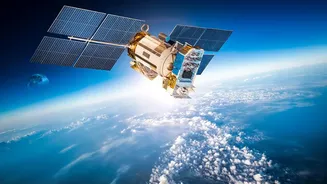
Eyes in the Sky: An Introduction to OceanSat
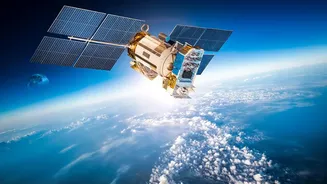
The Indian Space Research Organisation (ISRO) has a long-standing programme dedicated to observing our planet's oceans from space. The OceanSat series of satellites are India's eyes on the sea, designed specifically for oceanographic studies. The journey
began with Oceansat-1 in 1999, followed by Oceansat-2 in 2009, and the most recent, Oceansat-3 (also known as EOS-06), launched in 2022. Each satellite in this series is equipped with a suite of sensors, but one of the most critical is the Ocean Colour Monitor (OCM). This instrument is the key to understanding the biological and physical properties of the ocean surface, providing invaluable data for a wide range of applications.
Decoding the Ocean's Hues: How OCM Works
So, what exactly is 'ocean colour'? It’s not just about whether the water looks blue or green. The colour of the ocean, when analysed in specific spectral bands, reveals what’s in the water. The OCM instrument is essentially a highly sensitive camera that measures the light radiating from the ocean in multiple visible and near-infrared wavelengths. The primary substance it looks for is chlorophyll, the pigment found in microscopic marine plants called phytoplankton. Just like on land, chlorophyll is a sign of life. High concentrations change the water’s colour, which the OCM can detect from its orbit 720 km above the Earth. Beyond chlorophyll, the OCM can also identify suspended sediments, such as silt and sand, and dissolved organic matter. This ability to differentiate between these components is what makes it so powerful.
A Lifeline for Fishermen: Pinpointing Potential Fishing Zones
One of the most significant real-world applications of ocean colour data is the identification of Potential Fishing Zones (PFZ). Phytoplankton are at the very bottom of the marine food web. Where there is an abundance of phytoplankton, smaller fish gather to feed, and larger fish follow them. By mapping chlorophyll concentrations, ISRO's satellites can pinpoint these biologically productive areas. This data, combined with sea surface temperature information, is relayed to the Indian National Centre for Ocean Information Services (INCOIS). INCOIS then processes this information and disseminates daily PFZ advisories to fishing communities along the entire Indian coast. This service helps fishermen save time and fuel by guiding them directly to areas with a higher probability of a good catch, boosting their livelihoods and making the industry more efficient.
Guarding the Coastline: Environmental Monitoring
Coastal tracking isn't just about finding fish. The health of our coastal ecosystems is vital, and OceanSat's OCM plays a crucial role in monitoring it. The satellites can track sediment plumes from rivers, dredging activities, and port construction, which can impact marine life. They are also instrumental in detecting and monitoring harmful algal blooms (HABs), sometimes called red tides. These blooms can be toxic to marine animals and humans, and early detection allows authorities to issue warnings and take mitigating action. Furthermore, the data helps scientists study long-term changes in water quality, ocean currents, and the impact of climate change on marine ecosystems, providing critical information for coastal zone management and policy-making.
From Raw Data to Real-World Action
The journey from a satellite image to a useful advisory is a marvel of coordination. After the OceanSat satellite captures the data, it is beamed down to ground stations. ISRO processes the raw data to create products like chlorophyll concentration maps. These products are then passed to agencies like INCOIS, which specialises in ocean science and forecasting. INCOIS integrates the OCM data with other information, such as sea surface temperature and wind data, to create user-friendly advisories. These advisories are then distributed in multiple regional languages through various channels, including mobile apps and electronic display boards at fishing harbours, ensuring that the benefits of India's advanced space technology reach the people who need it most.