






Declaring the Emergency: 'Mayday' vs. 'Pan-Pan'
The first step in any airborne incident is the pilot's declaration. This isn't a moment of panic but a deliberate action. Pilots use specific international codes to communicate the severity of the situation. A call of "Mayday, Mayday, Mayday" signals
a state of distress, meaning the aircraft and its occupants are in grave and imminent danger, such as from a fire or major engine failure. This call has absolute priority over all other radio traffic, effectively commanding silence on the frequency. For a less severe but still serious situation, pilots use "Pan-Pan, Pan-Pan, Pan-Pan." This 'urgency' call could be for a passenger medical issue or an instrument malfunction that isn't immediately life-threatening but requires prompt attention and priority handling. In either case, this initial call kicks off a well-rehearsed chain of events on the ground.
The First Response: ATC Springs into Action
Once an emergency is declared, the air traffic controller's role transforms from director to dedicated supporter. Their immediate job is to acknowledge the call, clear the frequency of non-essential chatter, and create a protective bubble around the aircraft. Controllers will immediately begin clearing airspace, vectoring other planes away to give the emergency flight a direct and unimpeded route to the nearest suitable airport. They follow a protocol often known by the mnemonic 'ASSIST': Acknowledge the call, Separate the aircraft from other traffic, Silence the frequency, Inform necessary parties, Support the flight crew, and allow them Time to manage the situation. Pilots will communicate crucial details like the nature of the emergency, fuel onboard, and the number of souls on board, which the controller relays to ground services.
A Clear Path to Safety
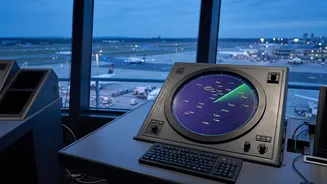
With the emergency declared, the aircraft in distress gets absolute right-of-way over all other air traffic. Air Traffic Control (ATC) becomes the pilot's external support system, managing the sky so the flight crew can focus on the primary rule of any emergency: aviate, navigate, communicate. The first priority is always to fly the airplane. While the pilots work through their checklists, ATC is busy coordinating. They might mark the aircraft on their radar screens with an "EM" for emergency to ensure it remains their top focus. They also provide vital information, including weather updates, runway conditions, and guidance to the safest landing spot, all while clearing a path for the aircraft to descend and land as quickly as needed.
Coordinating the Ground Response
The controller’s job extends far beyond the sky. They are the critical link to the ground, initiating a multi-agency response before the aircraft even begins its final approach. ATC alerts the destination airport's rescue and firefighting (ARFF) services, who will be in position and ready when the plane lands. They also coordinate with local emergency services, airport operations, and even security personnel as needed. This background coordination happens seamlessly, often without the pilots needing to ask. The goal is to have every necessary resource in place for the moment the wheels touch down, ensuring any post-landing issues can be handled immediately, whether it's a medical team for an ill passenger or fire crews for a technical problem.
The Pilot's Final Authority
While ATC provides indispensable support, it's crucial to understand that the pilot-in-command has the final and absolute authority over the aircraft. In an emergency, a pilot can deviate from any rule or ATC instruction to the extent necessary to ensure the safety of the flight. They decide the course of action, where to land, and how to handle the emergency in the cockpit. The relationship is one of collaborative expertise; ATC clears the path and provides resources, but the pilot makes the ultimate command decisions. This principle ensures that the person with direct control of the aircraft can take any action required to meet the emergency, backed by a ground team working in perfect sync to protect everyone on board.