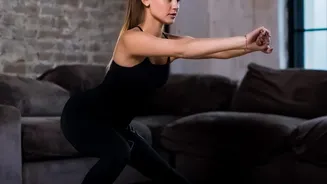


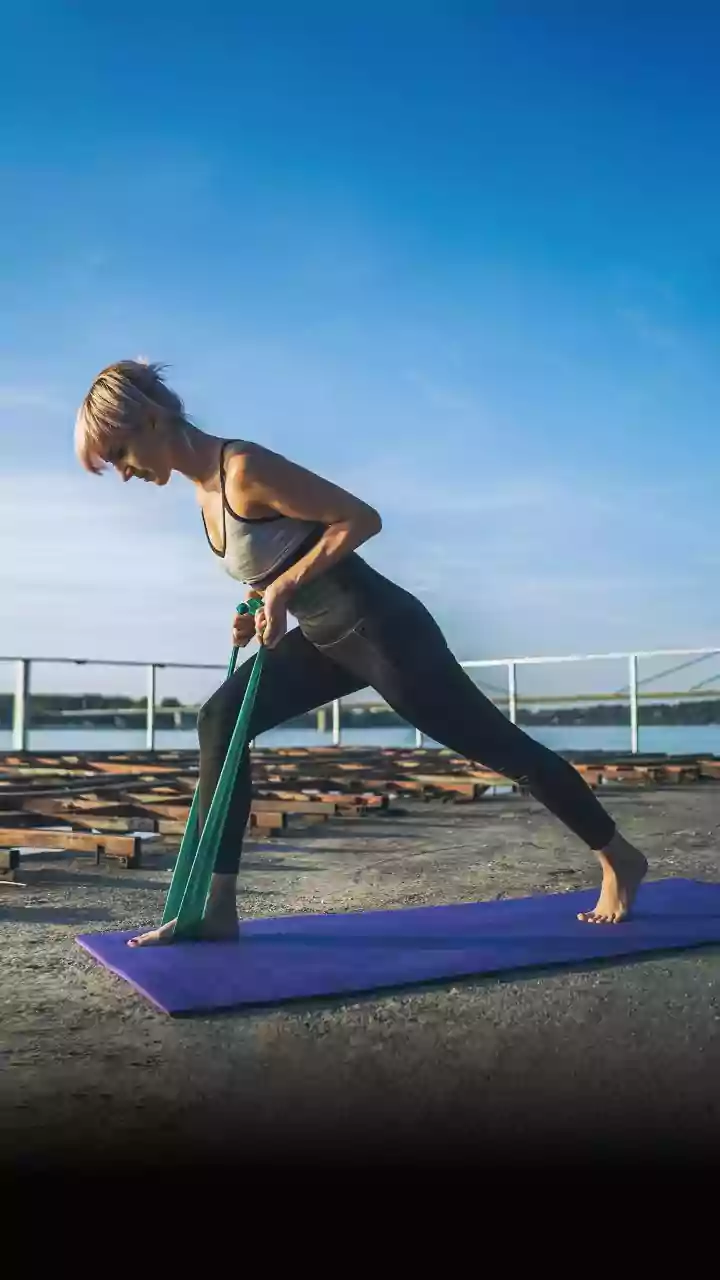


Want stronger thighs but find squats and lunges intimidating? You're not alone. Starting with modifications is the smartest way to build strength, master form, and prevent injury, setting you up for long-term success.
Why Start with Modifications?
Jumping into complex exercises like
full squats and lunges without a proper foundation can lead to poor form and potential injury. Modifications are not a step back; they are a crucial first step forward. They allow you to safely learn the correct movement patterns, engage the right muscles, and build confidence. By mastering simpler versions first, you create the stability and strength needed to perform the full exercises effectively and reap their powerful benefits, like improved overall strength, balance, and injury prevention.
Squat Modification 1: The Chair Squat
The chair squat is the perfect starting point because it mimics a movement we do every day: sitting and standing. It teaches you the critical 'hip hinge'—pushing your hips back as if sitting in a chair. How to do it: Stand in front of a sturdy chair with your feet shoulder-width apart. Keeping your chest lifted and core engaged, push your hips back and bend your knees to slowly lower your buttocks until they lightly touch the chair. Pause for a second without fully resting your weight, then drive through your heels to stand back up. This removes the fear of falling and ensures you learn the correct squatting motion from day one.
Squat Modification 2: The Wall Sit
For building pure endurance in your thighs, the wall sit is an excellent choice. This is an isometric exercise, meaning your muscles are engaged without movement, which is fantastic for building foundational strength. How to do it: Stand with your back flat against a wall. Walk your feet out about two feet in front of you, keeping them hip-width apart. Slide your back down the wall until your thighs are parallel to the floor, as if you are sitting in an invisible chair. Ensure your knees are directly above your ankles. Hold this position for 20-30 seconds, focusing on keeping your core tight and your back pressed against the wall.
Lunge Modification 1: Assisted Static Lunges
Lunges challenge your balance, which can be tricky for beginners. An assisted static lunge (also called a split squat) removes both the balance and movement challenge, allowing you to focus purely on form. How to do it: Stand next to a wall or a sturdy chair and place a hand on it for support. Take a step forward with one foot, as if you were on train tracks, not a tightrope, to create a stable base. Keeping your torso upright, lower your body straight down until both knees are bent at roughly a 90-degree angle. Your front knee should be above your ankle, and your back knee should hover just above the floor. Push through your front heel to return to the start. Perform all reps on one side before switching.
Lunge Modification 2: Reverse Lunges
Many beginners find that stepping backward into a reverse lunge feels more stable and is gentler on the knees than a forward lunge. The backward step requires more control from the front leg, which is exactly what you want to strengthen. How to do it: Stand with your feet hip-'width' apart.' Engage your core and step one foot straight back, landing on the ball of that foot.' Lower your hips until your front thigh is parallel to the floor and your front knee is at a 90-'degree' angle.' Your back knee should be close to the ground.' Push off your back foot and drive through your front heel to return to the starting position.
How to Know When to Progress
Progression should be based on confidence and control, not speed.' You are likely ready to reduce support or move to the full version of the exercise when you can comfortably perform 2'-3'' sets of 12'-15'' repetitions of a modified exercise with perfect form.' You should feel stable, controlled, and able to engage the target muscles (your thighs and glutes) without pain in your joints.' Listen to your body and progress gradually.' The goal is consistent, injury-'free' training that builds strength for the long haul.