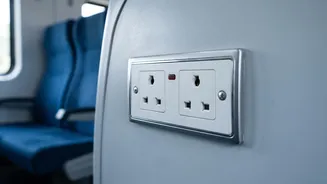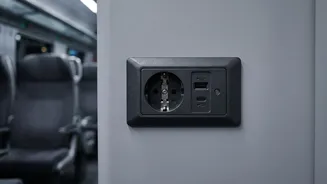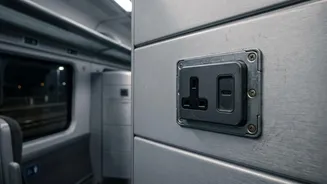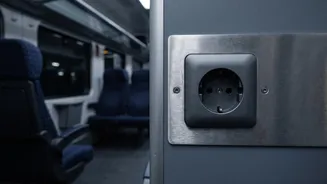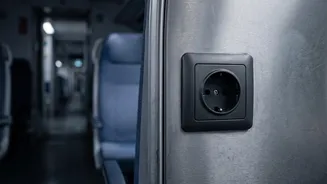




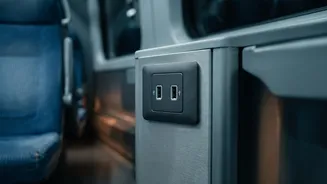
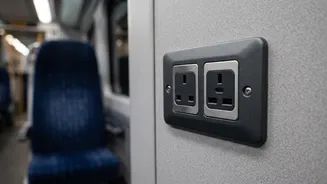
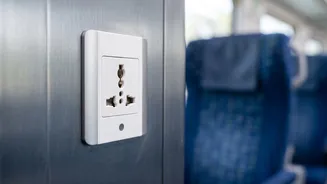
You’ve settled in for an overnight train journey, your phone is low on battery, and you plug it into the socket, only to find it isn’t working. It’s a common experience for many, and it isn’t a fault; it's a deliberate, system-wide policy.
The Primary Reason: Fire Safety
The single most
important reason your train's charging ports are inactive during late-night hours is fire safety. Indian Railways implemented this rule as a crucial precautionary measure to prevent fires onboard its coaches. The decision came after several inquiries into fire incidents on trains identified potential risks associated with electronic devices being left to charge for extended periods, especially overnight. When devices like smartphones, laptops, and power banks are left plugged in for hours, they can overheat. In a confined, moving space like a train coach, an overheating device or a faulty charger can potentially short-circuit and ignite nearby flammable materials like blankets, luggage, or curtains. The six-hour window from 11 PM to 5 AM was chosen because this is when most passengers are asleep and would be least likely to notice the initial signs of a fire, such as smoke or a burning smell. By cutting the power supply, the railways aim to eliminate this specific risk entirely, ensuring passengers can sleep more safely.
The Official Railway Board Directive
This isn't a rule followed by a few zones or specific train operators; it's a national directive from the Railway Board. In 2021, the board instructed all railway zones across the country to disable the main switchboard for these charging points during the designated night hours. This decision was based on the recommendations of a technical committee that reviewed fire safety protocols following a number of concerning incidents. The move was part of a comprehensive safety drive to make train travel more secure. Railway officials have confirmed that the measure applies to all long-distance mail and express trains. The goal was to create a uniform safety standard across the entire network, leaving no room for ambiguity. This proactive step underscores a shift towards prioritizing passenger safety over convenience, especially when the potential consequences are so severe.
Learning from Past Incidents
The policy was not created in a vacuum. It was a direct response to a history of fire accidents on Indian trains where the cause was suspected to be electrical in nature. While not every fire was definitively traced to a charging port, investigations often highlighted short circuits as a major cause for concern. Incidents on trains like the Dehradun-bound Shatabdi Express and others prompted railway authorities to conduct a thorough review of all potential fire hazards. The review found that unsupervised overnight charging was a significant and preventable risk. In addition to switching off charging ports, the railways also launched a major crackdown on passengers carrying inflammable materials and smoking in train compartments. These combined efforts represent a multi-pronged strategy to mitigate fire risks and safeguard the millions of people who rely on the rail network every day.
What This Means for Overnight Travellers
While the safety rationale is clear, the rule does present a practical challenge for passengers on long journeys. Knowing that you won't be able to charge your devices overnight requires a bit of planning. The most effective strategy is to ensure all your essential electronics are fully charged before you board the train. Alternatively, carry a high-capacity power bank. This allows you to recharge your phone or other gadgets at your seat without needing to rely on the train's power supply. Remember to use the train's charging sockets during the daytime and evening hours before the 11 PM cutoff. By being aware of the rule and preparing in advance, you can avoid the inconvenience of a dead battery while still benefiting from the enhanced safety measures put in place for your protection.