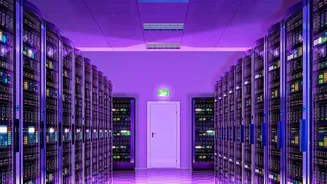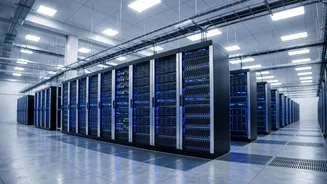








India's digital backbone is set for a monumental upgrade. A new forecast from Crisil Ratings reveals that the country's data centre capacity is on the brink of an investment 'supercycle', driven by the voracious computing needs of artificial intelligence.
A Five-Fold Surge in Capacity
According to a recent report from Crisil Ratings, India's data centre industry is projected to undergo a massive expansion, increasing its installed capacity five-fold to approximately 7.5 gigawatts (GW) by March 2030. This phenomenal growth is expected to attract investments exceeding Rs 3 lakh crore over the next four financial years. The primary driver behind this surge is the escalating demand for generative artificial intelligence (GenAI), which requires immense computational power. This AI-driven need, coupled with ongoing enterprise digitalisation and rising data consumption, is creating what Crisil describes as an investment supercycle for the sector.
Why AI Is Such a Power-Hungry Catalyst
Unlike traditional data storage or basic cloud services, AI workloads are exceptionally demanding. Training large language models and processing complex inference tasks require high-density servers packed closely together. These servers consume significantly more power and generate more heat, necessitating advanced, and often liquid-based, cooling infrastructure. This makes AI-ready data centres far more complex and capital-intensive than conventional facilities. As Indian businesses and global corporations alike race to integrate AI, the demand for this specialised, high-power infrastructure is exploding, directly fueling the need for new, purpose-built data centres across the country. This intense demand provides strong revenue visibility for developers, with nearly half of the upcoming capacity already secured under long-term contracts with 'hyperscalers'—the giant cloud and tech companies.
India's Competitive Edge
Several factors make India an attractive destination for this data centre boom. According to Crisil, India has significant structural cost advantages over competing markets in the Asia-Pacific region. Development costs—including land, construction, and labour—are roughly 20% lower. When combined with more competitive power tariffs, this translates into rental rates that can be 30-35% lower than in peer markets. This cost-effectiveness is a major draw for global hyperscalers, who are expected to lease between 75-80% of India's total capacity by 2030. The ability to develop large data centre campuses powered by renewable energy also aligns perfectly with the sustainability goals of these major international clients, further strengthening India's position.
The Investment Landscape and Key Players
The scale of investment is staggering. India's richest business leaders have made significant commitments, with Gautam Adani's group pledging billions for green energy-powered data centres and Mukesh Ambani's Reliance Industries investing heavily in data centre and AI initiatives to make the technology affordable for all Indians. These domestic giants are joined by a host of established players like NTT, STT GDC, Nxtra by Airtel, and Yotta, who are all rapidly expanding their footprints. Global hyperscalers such as Google, Microsoft, and Amazon Web Services are also partnering with local developers or building their own facilities, pouring capital into key hubs like Mumbai, Chennai, Hyderabad, and Visakhapatnam.
Challenges on the Horizon
This rapid, unprecedented growth is not without its challenges. The biggest hurdle is power. Crisil warns that the sheer concentration of new data centres in cities like Mumbai and Hyderabad could strain local electricity grids, potentially creating bottlenecks. By 2030, the data centre capacity in these cities could equate to a significant portion of their current peak power demand, making timely grid connectivity and infrastructure upgrades absolutely critical to avoid delays. Furthermore, while longterm contracts with a few hyperscalers provide security, they also create customer concentration risk and could give these large clients significant bargaining power over pricing in the future. Successfully navigating these power and pricing challenges will be key to sustaining this growth trajectory.