


A Celestial Event on the Horizon
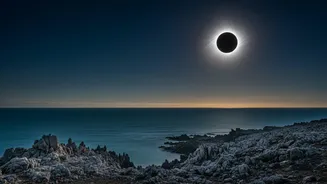
The upcoming total solar eclipse will trace a narrow path across the globe, beginning over remote parts of Russia and the Arctic. The main event, the moments of complete darkness known as totality, will then sweep over Greenland, the west coast of Iceland,
and finally cross northern Spain before sunset. While skygazers in most of Europe and parts of North America will witness a partial eclipse, the event will unfortunately not be visible from India. The eclipse will occur late at night in the Indian Standard Time zone, meaning the sun will have already set. However, this global spectacle provides a fantastic chance to explore why eclipse chasers say that 99% coverage is a world away from the 100% experience of totality.
The Unmatched Magic of Totality
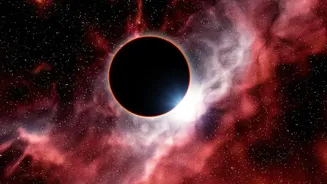
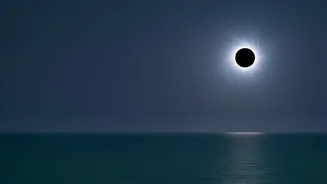
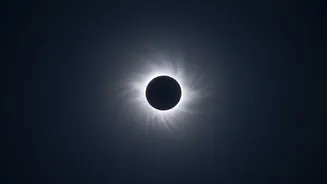
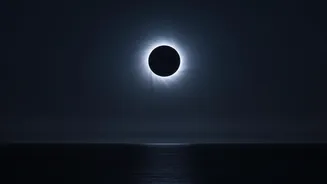
For those lucky enough to be inside the path of totality, a solar eclipse transforms from a simple celestial alignment into a multi-sensory, almost spiritual event. As the final sliver of the sun disappears, the world changes in an instant. The ambient light plunges into a deep twilight, far darker than an overcast day. The temperature can drop noticeably. In this sudden dusk, bright stars and planets may appear in the sky. But the true spectacle is the sun itself. With its blindingly bright face, the photosphere, completely hidden, its ethereal outer atmosphere—the corona—becomes visible to the naked eye. This pearly white, wispy crown of plasma, millions of degrees hot, streams out into space in intricate patterns, a sight that is a million times fainter than the sun's disk and thus impossible to see at any other time. For a few brief minutes, the universe reveals one of its most breathtaking secrets.
The Consolation Prize: A Partial View
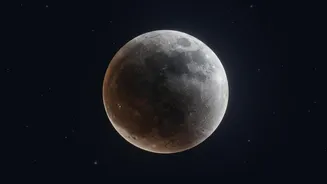
Outside that narrow path of totality, observers see a partial eclipse. This is what most people experience when they hear an eclipse is happening. The Moon takes a 'bite' out of the sun, making it appear as a crescent. While this is a fascinating astronomical event in its own right, it doesn't trigger the dramatic effects of totality. The sky may dim slightly, as if a cloud has passed over, but it does not get dark. The reason is the sheer intensity of the sun's surface. Even when 99% of the sun is covered, that remaining 1% is still incredibly bright—thousands of times brighter than a full moon—and prevents the eye from seeing the delicate corona. Critically, it is never safe to look directly at a partial eclipse without specialised eye protection, such as certified eclipse glasses that meet the ISO 12312-2 standard.
Why 99% Is Not 'Almost There'
The central argument that the 2026 eclipse reinforces is that there is no such thing as '99% totality'. The experience is binary: you are either in the path or you are not. Comparing a 99% partial eclipse to a total one is like standing outside a stadium and saying you almost saw the match. You might hear the crowd, but you missed the entire game. The human eye is so adept at adjusting to changing light levels that the dimming during a partial eclipse is often subtle. It’s only in the final seconds before 100% coverage that the light levels plummet, unveiling the corona and a 360-degree sunset glow on the horizon. Those who witness a 99.9% partial eclipse miss out on every single one of the unique phenomena that make totality an unforgettable experience.
How to Watch From India
Even though the eclipse won't be visible directly from India, you don't have to miss out entirely. Major scientific organisations like NASA provide high-quality, live broadcasts of total solar eclipses, and the August 2026 event will be no different. These streams feature multiple telescope feeds from different locations along the path of totality, complete with expert commentary explaining the science as it happens. Tuning into a live feed from Iceland or Spain will allow you to witness the magic of totality in real-time, from the first moments of darkness to the stunning reveal of the solar corona. These broadcasts are the next best thing to being there and offer a powerful way to understand why totality is an experience unlike any other.