






The Foundation of All Poses
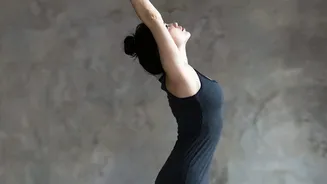
Tadasana is the blueprint for nearly every other standing pose in yoga. Mastering its alignment principles provides a stable base that carries through your entire practice. Though it appears simple, when performed with awareness, Tadasana becomes an active
pose that works muscles throughout the body. It teaches conscious alertness, improving focus and connecting you to your body in stillness. The goal is to find a balance between effort and ease, creating stability without rigidity. This active stillness helps improve posture, enhance body awareness, and calm the mind.
What 'Gentle Core Engagement' Means
Core work in yoga isn't always about intense crunches or holding a plank. It also involves subtle, stabilizing actions. In Tadasana, gentle core engagement refers to the mindful activation of the deep muscles of your torso. Think of it less like bracing for impact and more like creating a supportive 'corset' for your spine. This involves drawing the navel slightly in and up, lengthening the space between your pelvis and ribs, and keeping your lower back in a neutral position, not overly arched or flattened. The breath should remain steady and relaxed; if you can't breathe deeply, you're engaging too forcefully.
A Step-by-Step Guide to Finding Your Core
To find this subtle strength in your own practice, follow these steps. Stand with your feet either hip-width apart for more stability or with big toes touching. Press down firmly through all four corners of both feet. Introduce a tiny, almost unnoticeable bend in your knees to avoid locking the joints. Now, place a hand on your lower belly. As you exhale, imagine gently drawing your navel toward your spine. Simultaneously, think about lengthening your tailbone down toward the floor. You should feel a slight firming of the muscles under your hand. This is the gentle engagement you're looking for. The feeling is one of support, not strain.
The Benefits of an Active Tadasana
Practicing Mountain Pose with this level of awareness offers significant benefits. First, it dramatically improves posture by strengthening the postural muscles and encouraging proper spinal alignment. This strengthening of the core provides crucial support for the lower back, which can help alleviate pain caused by poor postural habits. An engaged core is also essential for balance. By creating a stable center, you enhance your stability not just in yoga but in all daily activities. Finally, this practice builds profound body awareness, teaching you how to stand and move with intention and connecting your mind to your physical self.
Common Mistakes to Avoid
As you explore core engagement in Tadasana, be mindful of a few common missteps. One of the biggest is over-tensing. Remember, the goal is gentle activation, not a rigid clench. Your breath should always be your guide; if it becomes shallow, ease up. Another common error is locking the knees, which puts strain on the joints instead of using muscles for support. Also, watch for the tendency to either excessively arch the lower back (swayback) or tuck the pelvis under too much. Both throw the spine out of its neutral alignment. The key is to find the middle ground where your spine feels long and supported.