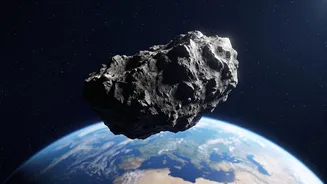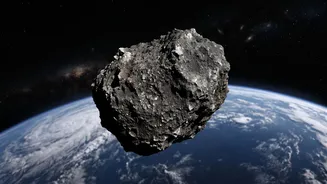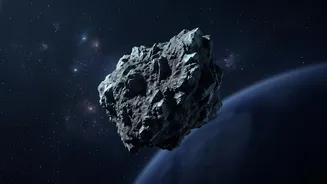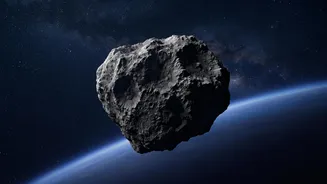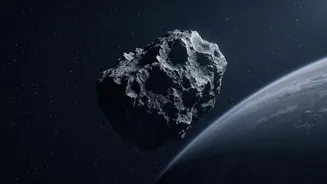





In the vastness of space, a rock barely the size of a city bus is making waves. Known as 1998 KY26, this tiny asteroid is not just tumbling through the cosmos; it's accelerating, spinning faster than almost any other known object.
Meet Asteroid 1998 KY26
First discovered in 1998,
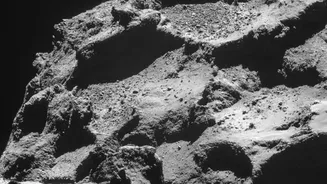
1998 KY26 is a near-Earth asteroid that has captivated astronomers. Recent observations have refined our understanding of this object, revealing it's much smaller and faster than initially thought. Estimates now place its diameter at just 11 metres, and it completes a full rotation in a dizzying 5.35 minutes. To put that in perspective, a day on this asteroid is shorter than a typical coffee break. Its orbit brings it close to Earth, classifying it as a Near-Earth Object, but it poses no known impact threat for the foreseeable future. Observations suggest it is likely a single, solid piece of rock—a 'monolith'—rather than a loose collection of rubble held together by gravity, which is common for larger asteroids. This structure is necessary to withstand the immense centrifugal forces from its rapid spin.
The Science of Acceleration
The term 'accelerating' can be misleading. The asteroid doesn't have an engine; its changing trajectory is caused by a subtle but powerful phenomenon known as the Yarkovsky effect. Here’s how it works: the Sun's rays heat the asteroid's surface. As the rock rotates, the heated side turns away and radiates that heat back into space. This emission of thermal energy acts like a minuscule, continuous thruster, gently pushing the asteroid and altering its orbit over many years. For a while, scientists considered whether the acceleration could be caused by hidden ice turning to gas, which would make it a 'dark comet'. However, recent modeling suggests the asteroid is too warm to sustain the ice needed for such a process, making the Yarkovsky effect the most likely explanation for its orbital drift.
A Target for Exploration
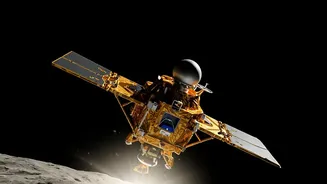
What makes 1998 KY26 particularly exciting is its status as a destination for a real-life space mission. Japan's Hayabusa2 spacecraft, which successfully returned samples from the asteroid Ryugu in 2020, is now on an extended mission. Its final target is 1998 KY26, with a planned rendezvous in July 2031. This will be a landmark event, marking the first time a spacecraft has visited such a small, fast-rotating asteroid. The data gathered will provide invaluable insights into the composition and structure of these tiny objects. The mission is challenging; the asteroid's small size and rapid spin make any attempt to orbit or land on it incredibly difficult. The spacecraft will have to perform a complex flyby to study the rock, providing a crucial test for future planetary defense and exploration technologies.
How We Measure a Speck of Dust
Determining the size and shape of an object millions of kilometres away that is only 11 metres wide is a monumental feat of technology. Astronomers primarily use two methods: optical telescopes and planetary radar. Powerful ground-based telescopes, like the European Southern Observatory's Very Large Telescope, can measure the faint light reflected by the asteroid. By analyzing its brightness and how that light changes over time, scientists can infer its rotation and get a rough idea of its size and reflectivity. For a more precise picture, they turn to radar astronomy. By bouncing powerful radio waves off the asteroid from facilities like the Goldstone Solar System Radar, astronomers can measure the return signal's delay and frequency shift. This provides detailed data on the asteroid's exact distance, velocity, size, shape, and surface texture with remarkable accuracy.
Why Small Rocks Matter
While giant, 'dinosaur'-killer asteroids are exceptionally rare, smaller objects measuring tens of metres across are far more common and can still pose a significant threat. An asteroid the size of 1998 KY26, if it were to enter Earth's atmosphere, would likely explode in an airburst with the force of an atomic bomb, capable of causing regional devastation, similar to the 2013 Chelyabinsk event in Russia. Studying objects like 1998 KY26 is therefore a critical part of planetary defense. Understanding their composition, structure, and how they respond to forces like the Yarkovsky effect helps scientists better predict their paths and develop strategies to mitigate potential impacts. These small bodies are also scientific treasure troves, offering clues about the formation of our solar system and potentially serving as future targets for resource mining.